
You have been working with cloud teams long enough and know one thing: cloud bills do not increase significantly due to a massive error by someone. They are caused by the fact that minor errors occur daily. Maybe a test server is left running. Or one of the GPU nodes was brought up and went running in five minutes. Someone had forgotten a logging pipeline, a cluster autoscaling when it is not supposed to.
This is pretty clear that cloud waste rarely arrives as a big event. It arrives quietly.
And as we head into 2026, it is this silent leak that companies are terrified about. It is not the cloud itself, but the increasing complexity that teams just cannot cope with. This is why AI-based optimization is becoming more and more popular. It is not because it is in fashion but because the Cloud has finally reached a point where it is beyond the control of human beings.
That is where Costimizer comes in, a modern Cloud cost optimization tool, which is required, not optional.
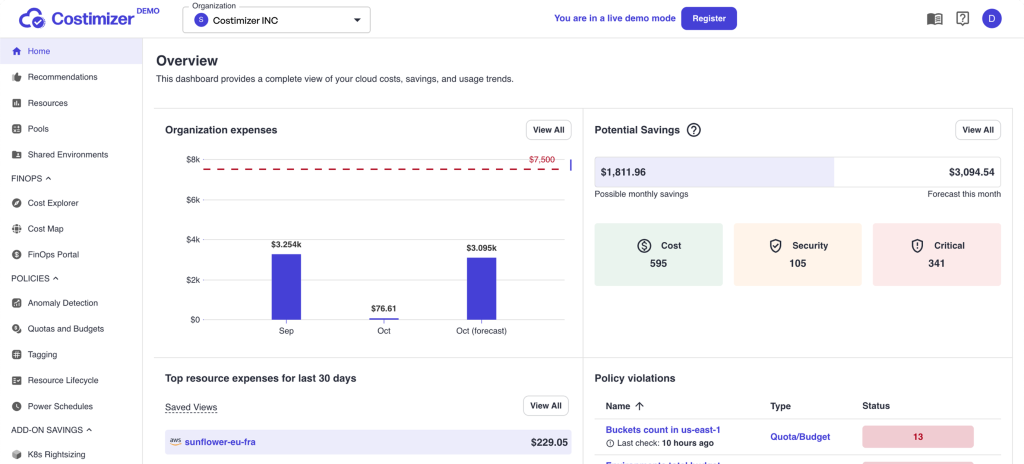
The Limits of Manual Monitoring and Traditional FinOps
It is not that companies find it challenging to use the cloud due to its cost, but because it is volatile. One month your team sees the spend is fine, next month, it suddenly surged up by 30%. And no one knows why till hours have been spent digging through dashboards.
Three things cause this uncertainty:
- The workloads are getting GPU-intensive.
- Teams are embracing multi-clouds.
- Cloud vendors vary prices, SKUs, and billing logic at a constant rate.
An engineering team can not be expected to keep track of this manually. And that’s the real issue. Cloud bills do not explode due to the carelessness of people. They fail due to the fact that modern cloud systems are developing at a quicker rate than the teams.
2026 will amplify this problem. More AI workloads. More ephemeral resources. Further temporary experiments. Additional unseen operation expenses.
In a nutshell, it is not a spending issue in companies but a visibility issue.
How AI Changes Cloud Cost Management Completely
Look at any engineering team. They already have the pressure of delivering features faster, keeping the uptime, managing incidents, and keeping pipelines running. FinOps is an activity that they look at when they have time. And there’s never time.
This is what teams tend to overlook:
- Unproductive groups operating at night.
- Logs scaling silently.
- Over-provisioned instances of services are deployed.
- Buckets of storage swell indefinitely.
- Snapshots piling up.
- Containers scaling out of anticipated limits.
- Dev environments that were not touched in weeks.
These aren’t rare problems. They are everyday realities.
Conventional dashboards present the issue when it has already become expensive. They do not interrupt it in the process. That is why businesses are currently moving to AI-based automation, not due to any fancy capabilities, but because the size of the Cloud has become too large to monitor manually.
The Real Areas Where Companies Lose Money in the Cloud
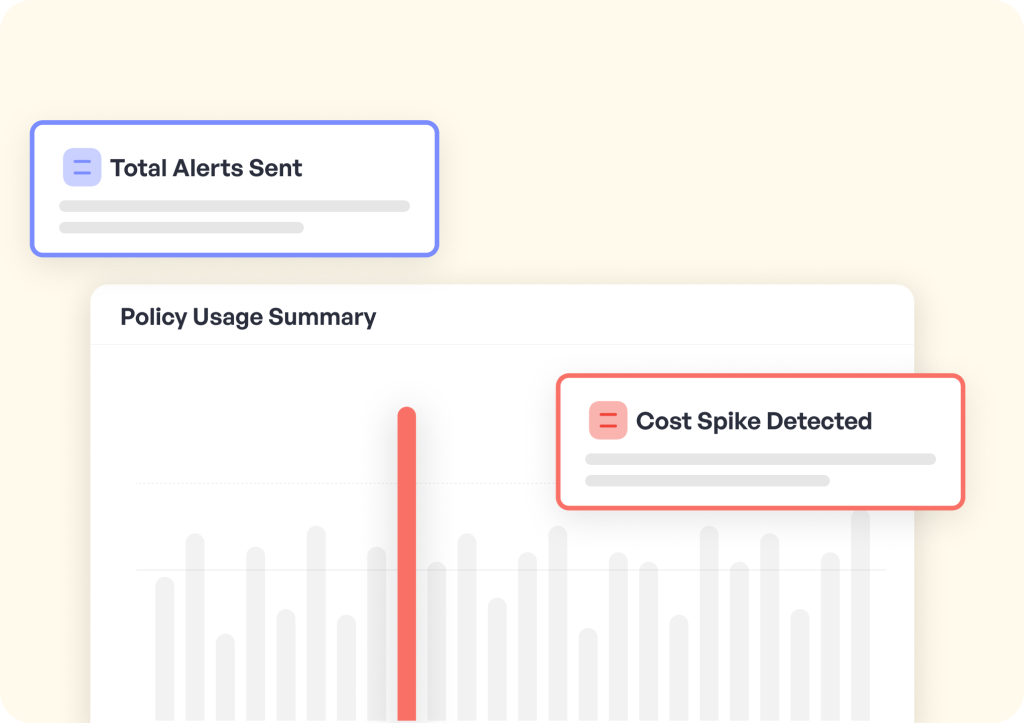
What companies need is something that watches the cloud the way engineers would—if they had infinite time and attention.
This is where Costimizer comes in.
Costimizer is more of a proactive guardrail, unlike visibility tools. It does not merely monitor your cloud activity. It interprets it. Detects patterns. Flags anomalies. Proposes superior options. And, where it is permitted, automates the fix.
The platform actually does the following:
- Tracks cloud cost metrics 24/7
- Spots are expensive prior to transforming into billing shocks.
- Suggests real-use rightsizing.
- Recommends the appropriate combination of savings plans.
- Identifies lost and neglected resources.
- Imposes tagging and policies.
- Idle environments are closed.
- AWS vs. Azure vs. GCP pre-deployment pricing.
- Automatically cleans up waste using agentic workflows.
We have seen numerous cloud cost optimization strategies. Oftentimes, companies do follow them but still see close to no results. At this point, it’s not their fault. They just need the right tools, because the right strategies can only take you so far.
Where Companies Save Money (The Real Fixes That Matter)
The majority of teams believe that optimization is the process of switching a server off at night. The most significant savings are actually in the places that they do not visit very often.
Some of the examples that Costimizer can deal with without any problem:
The GPU Surprise
A single wrongly set training job may cost thousands of dollars in one evening. Costimizer detects these spikes in a few minutes and notifies immediately.
Rightsizing Blind Spots
Teams will tend to take bigger cases to be on the safer side. AI validation of real-world usage and proposing less wasteful alternatives does not impact performance.
Commitment Strategy
Purchasing RIs or SPs without prognostication results in underutilization. The usage of the costimizer models and the specific combination that will save money every month is recommended.
Orphaned Resources
Volumes, snapshots, IPs, forgotten machines, and teams hardly ever pay attention to them. AI picks them up immediately.
Cross-Cloud Confusion
Placing loads on the default cloud instead of the lowest-cost one costs companies thousands of dollars. Costimizer is an automatic price comparison tool that is deployed before use.
The difference is felt immediately when companies implement such changes:
- 15-20% savings in the first week.
- 25-30% savings as automation takes hold.
- Stability over long-term rather than uncertain bills.
This isn’t cost-cutting. This is the cost discipline embedded in the infrastructure.
Why AI-Driven Optimization Will Matter More Than Ever in 2026
The cloud is no longer a pay-as-you-go place. It is a place where you spend on what you forget.
Manually tracked teams will continue to put out fires. Artificial intelligence teams will be ahead of the issue.
AI-based optimization is not a trend, but a requirement of:
- Predictable billing
- Better governance
- Faster decision-making
- Cleaner deployments
- Leaner infrastructure
- Smarter engineering teams
- Fewer headaches in operations.
Costimizer facilitates this transition. It introduces intelligence, automation, and a clean FinOps discipline to your cloud environment without imposing additional work on your engineers.
The victorious companies in 2026 will not necessarily have the highest cloud budgets. They will be the smartest in terms of cloud controls.
Bottom Line
The cost of cloud computing is increasing due to the growing complexity of cloud services. And things will continue to become more complex as AI, multi-clouds, and distributed systems continue to grow.
The only sustainable solution is the use of AI-based optimization. Costimizer provides an intuitive, realistic, and highly productive method by which businesses can manage their cloud budgets using real-time insight and automatic response.
Visit Costimizer.ai to find out how Costimizer can assist your team in reducing waste, streamlining FinOps, and transforming cloud expenses into a predictable operating cost.
AI optimization is just the foundation. Don’t forget to optimize the procurement price, not just the usage. While your AI shuts down idle instances, agency discounts can cut another 20-30% via contract terms alone. Tech is cool, but real money is made in the right agreements.