
If you’re a brand looking to get the most out of your digital marketing process, all you need to do is rank within the first 3 for keywords related to your niche.
While it does sound simple and straightforward, it really isn’t! The goal of every company is to scale to the heights of Google’s Search Engine Results Page.
And this makes getting to the top tedious, especially if you don’t know what you’re doing. But this is why we’ve made this guide for you!
Our team has highlighted more than a few simple ways you can use to get to the top of searches. Let’s go ahead to the next section.
12 Simple Ways to Climb the Google Search Results
1. Improve Page Loading Speed
If we were to pick just one thing that you should do for better overall ranking results for your website, this would be it. Page loading speed has become vital over the years.
Google has stated that user experience is paramount to search engine rankings. And loading speed figures right at the top.
There are several things you could do to improve page loading speed. Enabling browser caching is important because it allows local storage of data making loading times much quicker after the first time.
Minifying CSS, JavaScript, and other background processes can also speed up load times considerably. It reduces file size, minimizes HTTP requests, and results in faster parsing and execution.
Also, consider using a Content Delivery Network (CDN) to help load assets quickly.
2. Optimize SEO Keywords List
Improving your SEO profile is a great way to catapult into the top rankings of searches. One of the first things you should be looking to optimize from an SEO standpoint is your keywords.
Keyword lists for any niche are pretty dynamic and they change over time. Use tools like Google Keyword Planner and Google Analytics to get the most optimal keywords for your niche.
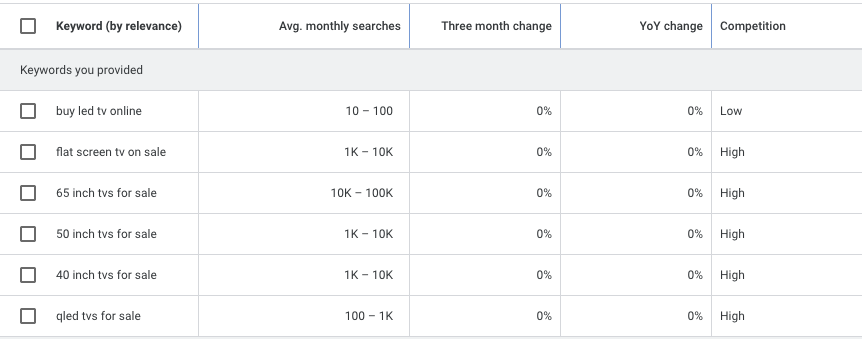
When shortlisting keywords, ensure that you spend more time on long-tail keywords as they are more useful in the long term.
It is also important to look into what your competitors are doing with keywords and learn from them.
Prioritizing low-competition keywords is the way to go because it lowers your spending and gets you more results per marketing dollar.
3. Ensure Website is Mobile-Friendly
Along with page load speed, mobile optimization has also evolved as a primary ranking signal at least on Google searches.
With the advent of more powerful mobile devices, people are using them more than their computers. This has resulted in mobile traffic outpacing other traffic sources.
So, what does this mean for SEO agencies?
There has been more focus on developing mobile-friendly websites. Responsive design themes are preferred over more static designs of earlier.
There have been more optimizations on websites being more “touch-friendly” as opposed to using the mouse. Font sizes are adjusted based on the size of the screen to make it more readable.
Images are also compressed more on mobile devices to make them load even faster. Test your website’s mobile friendliness with Google’s Mobile-Friendly Test.
4. Audit Content for SEO
After uploading hundreds of blog posts you’re still not seeing the results you want. What could be the reason? You might have to take a look at your content’s viability for SEO.
Using tools like Ahrefs and Semrush, you can identify content that is too thin or underperforming on your website.
The target is to revamp these content pieces so they can score better on SEO while also being helpful to readers.
Get rid of outdated information on your website like stats and case studies and replace them with newer data.
It is vital that you add SEO-centric elements like headers and improve the readability of the content.
Using shorter paragraphs allows people to skim through the content.
Adding FAQs and internal links to content pieces can increase visibility on search engines.
5. Include Visual Content Formats
If your website is text-heavy, consider using images and video to break the monotony up. Simply adding stock images throughout your website is not going to do any good.
The key to using images effectively is to know when and where to use them. Also, choose original images over stock images as they add more credibility to your brand and website.
Likewise, when using video, only use auto-playing video if it is really necessary and adds to the look and feel. And even if you do use autoplay, having audio on by default is considered a bad idea generally.
Add charts and graphs to longer content pieces to illustrate your point and make it more “scannable” by readers.
Also, consider adding interactive visual elements like buttons for CTAs so people are more likely to click them.
6. Leverage Social Media
Most brands make the mistake of keeping their social media and website as separate entities. This is a mistake because you’re losing out on a lot of marketing muscle if you don’t integrate the two.
Use your social media handle to share content that you post on your website. Repurposing longer-form content to threads on X is a great idea to get more engagement.

Collaborate with influencers in your niche to get more people interested and shoot up the rankings. Make it a point to engage with your community, specifically in the comments on your social media posts.
It is important to remember that while interactions will be less than formal on social media, your team should be on their best behavior.
Leverage the power of social media as a cross-promotion tool for your business.
7. Build High-Quality Backlinks
Backlinks have always been a reliable way to get rankings up for brands regardless of their niche. There are several ways you can improve your backlink profile.
The most common is through guest posting on other authority websites in your niche. While there is the option of paying for guest posting, it falls under the black/grey area and is not encouraged.
You’re much better off collaborating with them to get your blog post posted on their website. This is one of the SEO techniques that is easy to start off with but gets harder as you climb the rankings.
The reason is that ranking boosts are quicker at the start when you don’t have any backlinks but as time goes on, you will have difficulty getting higher authority backlinks.
8. Revamp Your Meta Information
Another area where brands need to make changes periodically is their meta titles and descriptions. Ensure that all your titles are under 60 characters and have keywords included.
Meta descriptions should be fewer than 160 characters so you can be a bit more liberal with language and keywords. Ensure that you have unique titles for all your pages and don’t have any duplicates.
Test your click-through rate with tools after sufficiently A/B testing it. Audit all your metadata to ensure that it aligns with the page intent. Lastly, don’t force keywords into it, rather let it flow naturally.
Remember that the meta descriptions are more for the person browsing through search and not just search engine spiders.
9. Create an Effective Schema Markup
Many people are still confused about schema markup but it really is quite simple. Think of schema markup as a way to communicate with search engine spiders about the content of your page.
Creating the right schema markup enables rich snippets that appear at the top of searches. Since it is placed even before the first rank and sometimes paid ads, it is indeed a coveted spot for marketers.
If this sounds daunting to you, don’t worry. There are several tools available like schema.org and Google Structured Data Markup Helper that can help you get ahead of these.
When you’re done, you can use Google’s Rich Results Test to check if it works as expected. Always remember that rich results produce more organic traffic which is worth this small hassle!
10. Optimize Website Images
Website images are an area where there is a lot of scope for tweaking and optimization. The goal of this step is to ensure that your images are as small as possible without losing quality.
Image optimization starts right from the naming convention. Giving generic names to your images will not give you the needed results.
For example, an image just named ‘small-purse.jpg’ should be optimized as ‘small-brown-leather-hermes-clutch.webp’ to direct more relevant traffic to your website.
Also, it is a good idea to choose WebP over JPG and PNG formats because it has better compression.
Ensure that your images are all loaded into a responsive layout so they can scale according to the screen size. To improve image fidelity and make it more accessible to all users, don’t overload it with text.
Feel free to add subtitles to the bottom of the images if you need to.
11. Secure Your Website
Better security is mandatory for all websites wanting to rank on the first page, and we think it’s a good thing.
There are no downsides to having a more secure website and all business owners should consider improving it, not just for their rankings but for their users.
The first thing to look at is the HTTPS text on your website address. If you don’t have it, then you need to install the right SSL certificates.
HTTPS is considerably more secure than older HTTP and can also help your website rank higher. Update all your CMS plugins and themes so there are no security lapses that you have to worry about.
Audit your block list on a regular basis to prevent those pesky spam referrers to your website.
12. Track KPIs and Analytics
Once you have everything in place, don’t forget to have a robust monitoring process in place. It helps you keep an eye on your keyword rankings and organic traffic.
Periodically check on bounce rates on your website pages, especially for those vital landing pages. High bounce rates are a reliable indicator that something is wrong with your page.
Google Analytics and Search Console are powerful platforms that can help you do this and more.
Also keep an eye on other SEO metrics like CTR and backlink growth with fully featured tools like Ahrefs, Semrush, and Moz.
The ultimate goal is to have a tailored dashboard that can give you a bird’s eye view of your entire website landscape without having to look at each of these tools individually.
Key Takeaways
- Optimize page load speed through image compression, caching, and better hosting providers.
- Improve keyword lists for better SEO performance by updating them to align with industry trends.
- Audit your content periodically to improve content and fill gaps in the knowledge base.
- Build a high-quality backlink profile by collaborating with other authority brands in the niche.
- Work on better schema markup that helps you get into the rich snippets category for better organic performance.
- Create a comprehensive tracking process that can help you keep tabs on your website performance.