
Introduction
Ecommerce continues to grow steadily, but supply chains are under more pressure than ever. By 2026, nearly 28% of global retail purchases are expected to take place online, with ecommerce sales having grown by approximately 8.5% in 2025. As order volumes increase, customer expectations grow just as quickly. Faster deliveries, accurate inventory visibility, and easy returns are no longer nice to have. They are expected.
This shift has pushed logistics to the center of ecommerce operations. The global logistics market is projected to grow from USD 524.20 billion in 2025 to USD 1,903.08 billion by 2032, showing how closely supply chain performance is tied to online growth.
To keep up, businesses are moving away from manual processes. Many are adopting AI-driven automation to handle complexity, control costs, and scale operations without slowing down or sacrificing accuracy.
1. What Ecommerce Supply Chain Management Includes Today
An ecommerce supply chain covers everything that happens from sourcing products to delivering orders and handling returns. As businesses scale, these processes become harder to manage due to multiple suppliers, warehouses, carriers, and sales channels.
AI helps bring structure to this complexity by connecting data across systems and automating decision-making where speed and accuracy matter most.
Core Components of the Ecommerce Supply Chain
- Sourcing and supplier management
- Inventory planning and warehousing
- Order fulfillment and shipping
- Last-mile delivery
- Returns and reverse logistics
Each component generates data that AI systems use to improve coordination and performance.
2. How AI Fits Into the Supply Chain Workflow
AI does not replace supply chain systems. It enhances them.
Modern AI solutions sit on top of existing platforms like ERP, WMS, OMS, and TMS. Using APIs, they pull data in real time, analyze patterns, and recommend or automate actions.
Types of AI Used in Supply Chains
Machine learning for demand forecasting and risk prediction:
Machine learning models analyze historical sales, seasonality, customer behavior, and external signals like market trends to forecast demand with greater accuracy. These models also help identify supply risks early, such as supplier delays or sudden demand spikes, allowing teams to act before disruptions occur.
Process automation for routine operational tasks:
AI-driven automation handles repetitive supply chain activities such as purchase order creation, shipment tracking, invoice matching, and status updates. This reduces manual workload, minimizes errors, and keeps operations moving without constant human intervention.
Optimization algorithms for routing and inventory placement:
Advanced optimization algorithms evaluate variables like transportation costs, delivery timelines, warehouse capacity, and service levels. They continuously adjust routes and inventory distribution to reduce costs while maintaining fast and reliable fulfillment.
AI copilots for supplier and internal communication:
AI copilots support procurement and operations teams by responding to supplier inquiries, confirming orders, and summarizing supply chain updates in real time. This improves collaboration across teams and ensures critical information flows faster across the organization.
Together, these AI capabilities help ecommerce supply chains shift from reactive problem-solving to proactive, data-driven decision-making at scale.
3. Key Areas Where AI Improves Ecommerce Supply Chains
AI delivers the most value when applied to high-impact areas. Instead of spreading AI across everything at once, successful businesses focus on specific functions first.
Inventory Planning and Demand Forecasting
AI analyzes historical sales, seasonality, promotions, and real-time demand signals. Forecasts are updated continuously, not monthly.
This helps businesses:
- Reduce stockouts and overstock
- Improve inventory turnover
- Position stock closer to demand
Warehouse Operations
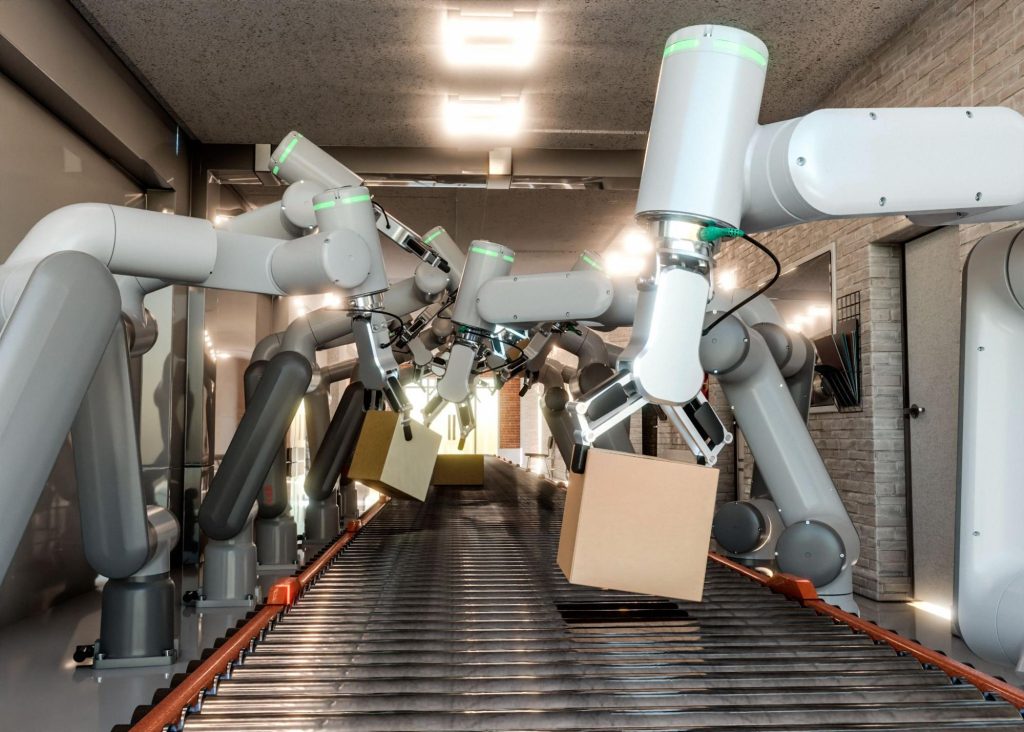
AI optimizes warehouse layouts, picking paths, and task assignments. In many cases, robots handle repetitive work like picking and sorting.
Results include faster fulfillment and fewer errors.
Shipping and Delivery
AI-driven route optimization analyzes traffic, weather, and delivery history. Logistics companies using these tools save millions of miles of driving each year, lowering fuel costs and improving delivery reliability.
AI in Action Across the Supply Chain
The table below summarizes how AI is applied across different supply chain functions and the value it delivers.
| Supply Chain Area | How AI is Used | Business Impact |
|---|---|---|
| Demand Forecasting | Predicts future demand using sales and market data | Fewer stockouts and excess inventory |
| Inventory Management | Monitors stock levels and automates replenishment | Lower carrying costs and better availability |
| Warehouse Operations | Optimizes layouts, picking routes, and labor allocation | Faster order processing, fewer errors |
| Logistics & Routing | Selects efficient delivery routes in real time | Reduced fuel costs and delivery delays |
| Returns Management | Predicts returns and automates inspection decisions | Faster refunds and lower reverse logistics costs |
| Supplier Management | Evaluates supplier performance and risk | More resilient and reliable sourcing |
4. Why API Integration is Critical for AI Success
AI systems are only as effective as the data they can access. Ecommerce supply chains rely on multiple platforms, often spread across teams and partners.
API integration allows AI tools to connect these systems and act on data instantly.
Benefits of an API-First Approach
- Real-time visibility across the supply chain
- Faster automation without system replacement
- Easier scaling as volumes grow
- Reduced dependency on single vendors
For enterprise and fast-growing ecommerce brands, API-driven architecture is essential for long-term AI adoption.
5. Challenges to Keep in Mind When Adopting AI
AI adoption does come with challenges, especially for businesses with complex or legacy operations. Most issues are related to readiness, not technology.
Data quality:
AI systems depend on accurate and consistent data to deliver reliable insights. When data is fragmented, outdated, or stored across disconnected systems, AI models can produce flawed forecasts and recommendations. Improving data hygiene and standardization is often the first step toward successful AI adoption.
Legacy systems:
Many ecommerce businesses still rely on older platforms that were not built for real-time data sharing or automation. These systems may require upgrades, middleware, or API integrations to function effectively across the supply chain with AI tools.
Team adoption:
AI-driven insights are only valuable when teams trust and use them. Employees need proper training, clear workflows, and time to understand how AI supports decision-making.
A gradual rollout helps teams gain confidence while maintaining human oversight where it matters most.
These challenges are manageable with a phased rollout, clean data practices, and clear ownership of AI-driven decisions.
6. Sustainability and Long-Term Impact of AI
AI is also helping businesses build more sustainable supply chains. Better demand forecasting reduces overproduction. Route optimization lowers fuel consumption and emissions. Warehouse energy usage becomes easier to manage with predictive systems.
Many companies now use AI to evaluate suppliers based on sustainability metrics, ensuring responsible sourcing across the supply chain.
Over time, AI-driven automation supports both operational efficiency and environmental responsibility.
Final Thoughts
Ecommerce growth is pushing supply chains to evolve faster than ever. Manual processes and disconnected systems can no longer keep up with rising expectations.
AI-driven automation helps businesses operate with greater speed, accuracy, and confidence. It turns supply chains into strategic assets rather than operational bottlenecks.
Companies that invest in AI today are better prepared to scale, compete, and adapt in the years ahead.