
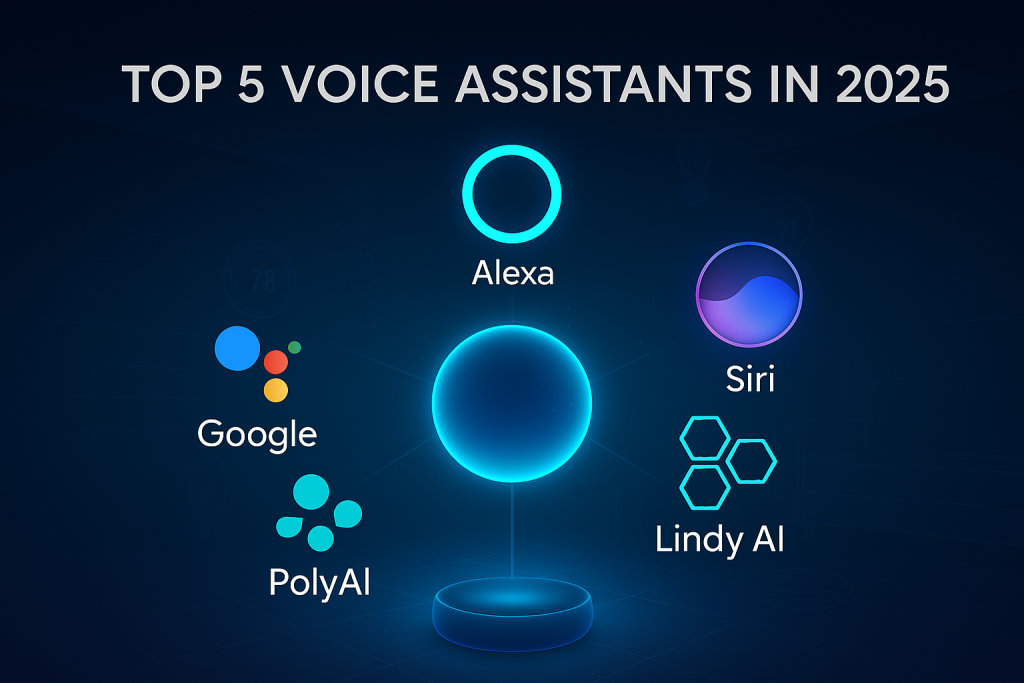
The smart home revolution continues to accelerate. Voice assistants become integral hubs for daily life. They can control everything from lights and thermostats to entertainment systems. AI voice assistants have become more intelligent in 2025. It has improved contextual awareness and can seamlessly integrate across devices. This article explores the top five voice assistants in the market that commands the smart home landscape. I will be highlighting their unique strengths.
Google Assistant (The Smartest Overall)
Google Assistant is the smartest and most versatile voice assistant in 2025. Powered by Google’s massive data resources, it has advanced natural language processing (NLP) and excels at understanding complex queries. Its contextual awareness has been heightened, allowing it to deliver quick, accurate responses.
Key Strengths:
- Contextual Understanding: Google Assistant can grasp nuances of follow-up questions and conversational context. This enables smooth, multi-turn dialogues that feel natural.
- Deep Ecosystem Integration: It powers a wide range of Android devices, Google Nest products, and third-party smart home gadgets. It offers seamless synchronization of schedules, reminders, and media with Google’s broad ecosystem.
- Real-Time Voice Translation: In 2025, Google Assistant supports real-time voice translation, breaking language barriers within smart homes or on the go.
- Personalization: AI-driven customization tailors routines, news briefings, and device settings based on user preferences.
Google Assistant can merge smart home control, web-powered artificial intelligence, and personalized assistance. This makes it ideal for users embedded in the Google ecosystem, as it serves as a highly capable, conversational assistant to manage their smart lives.
Amazon Alexa (The Best for Smart Home Compatibility)
Alexa continues to be the top choice for smart home integration in 2025. This is supported by Amazon’s extensive device ecosystem and strong partnerships. It works with over 140,000 smart home devices. That makes it the most compatible voice assistant for a wide range of hardware.
Key Strengths:
- Smart Home Hub: Alexa works as the central brain for home automation. It enables complex routines, device groupings, and smart scenes. These features are available through compatible Echo and Fire devices.
- Multi-User Voice Recognition: The 2025 updates include advanced voice recognition. Alexa can now distinguish between multiple household members. This allows for personalized responses and enhanced security.
- Shopping and Services: Alexa allows direct shopping on Amazon. You can place orders using just your voice. It also provides timely delivery updates. This makes shopping more convenient.
- Routines: Alexa supports powerful routines that automate daily tasks. These routines can be triggered by voice, location, or schedule. This helps busy households manage chores more efficiently.
Amazon Alexa is a popular choice for users building comprehensive smart homes. It supports a wide variety of connected gadgets. One of its key strengths is Alexa Skills, which offer specialized functionalities for different needs. Alexa is also known for its flexibility and commercial integrations. These features make it the most adaptable smart home voice assistant available today.
Apple Siri (Champion of Privacy and Apple Ecosystem)
Apple Siri remains the best voice assistant for Apple device users and privacy advocates. It is built into all Apple hardware. Siri uses the Apple Neural Engine to power its on-device intelligence. This allows it to process many tasks without sending data to the cloud. As a result, it prioritizes data privacy. At the same time, it maintains strong functionality without major compromises.
Key Strengths:
- Privacy-Focused: Siri processes most of the user data directly on the device. This limits the need to send information to the cloud. As a result, the chances of data breaches or unauthorized snooping are significantly reduced.
- Seamless Apple Integration: Siri works especially well for users who are deeply invested in Apple products like the iPhone, iPad, Mac, Apple Watch, and HomePod. It offers smooth control and consistent experiences across all these devices. Siri also integrates effortlessly with Apple HomeKit, enhancing smart home management.
- Shortcuts and Automation: With Siri Shortcuts, users can create custom voice commands. These commands can trigger a series of actions or workflows automatically. This adds convenience and personalization to everyday tasks.
- Context Awareness: Siri remembers user context, including past conversations and preferences. It uses this information to improve interactions. Importantly, this is done without compromising user security.
Though sometimes seen as less versatile than Google Assistant or Alexa outside Apple’s ecosystem, Siri’s strong privacy safeguards and device sync make it indispensable for loyal Apple consumers prioritizing security and convenience in their smart homes.
Lindy AI (The Customizable Enterprise and Personal Assistant)
A rising star in 2025 is Lindy AI. It is known for its highly customizable and efficient approach to voice assistance. Unlike general-purpose assistants, Lindy takes a more focused approach. It allows users or enterprises to build tailored AI voice assistants. These assistants are designed for specific tasks or workflows. The best part is that no coding skills are required.
Key Strengths:
- Custom AI Assistant Creation: Users can create personalized voice assistants tailored for work, education, or personal use. These assistants can be grouped into AI teams, with each one handling a specific role or task.
- Exceptionally Accurate Command Recognition: Lindy offers over 99% accuracy in understanding voice commands. This ensures tasks are executed with high precision and reliability.
- Voice Shortcut Automation: Users can easily set up voice-based workflows. These shortcuts help automate tasks and significantly improve productivity.
- Interoperability: Lindy is compatible with a wide range of phones and platforms. This makes it a versatile choice for users looking for customized voice AI solutions.
Lindy is ideal for users and businesses wanting advanced voice automation and highly personalized virtual assistants that adapt to complex needs without sacrificing ease of use.
PolyAI (Best for Voice-First Customer Service)
PolyAI is primarily focused on enterprise solutions. However, it stands out in 2025 as one of the most advanced voice-first AI assistants. It offers natural and multilingual conversational agents. These are mainly used for customer service.
Such capabilities are becoming more relevant in smart home settings. Voice assistants are no longer limited to basic commands. They are now used to manage customer interactions. Some even handle technical support calls.
Key Strengths:
- Multilingual: Supports 45 languages with fluent dialogue management and conversational AI optimized for voice use.
- Natural Language Understanding & Spoken Language Understanding: Proprietary models excel at identifying intent and adjusting speech transcription for accuracy.
- Omnichannel Deployment: PolyAI assistants integrate with phone, chat, and contact center systems, offering 24/7 intelligent support.
- Analytics and Reporting: Real-time performance feedback helps optimize assistant behavior and customer satisfaction.
Though less mainstream for personal smart home use, PolyAI’s cutting-edge conversational tech represents the future of voice assistants in retail, services, and enterprise smart environments.
Conclusion
As smart homes become more advanced, voice assistants are evolving too. They are no longer just tools for simple tasks. These assistants are now powerful, secure, and personalized AI companions. They can handle complex tasks with ease.
Choosing the right voice assistant depends on several factors. First, consider your smart home setup. Then, think about your preferred ecosystem. You should also keep privacy concerns in mind. Lastly, consider the specific features you need.
Google Assistant and Alexa are still the most popular choices. They are great for everyday users. Siri is the best fit for Apple users who care about privacy. Newer voice assistants are also making a mark. Lindy and PolyAI focus on customization. They are also strong in enterprise-level voice AI.
Featured image created by Microsoft Copilot, AI companion from Microsoft.