
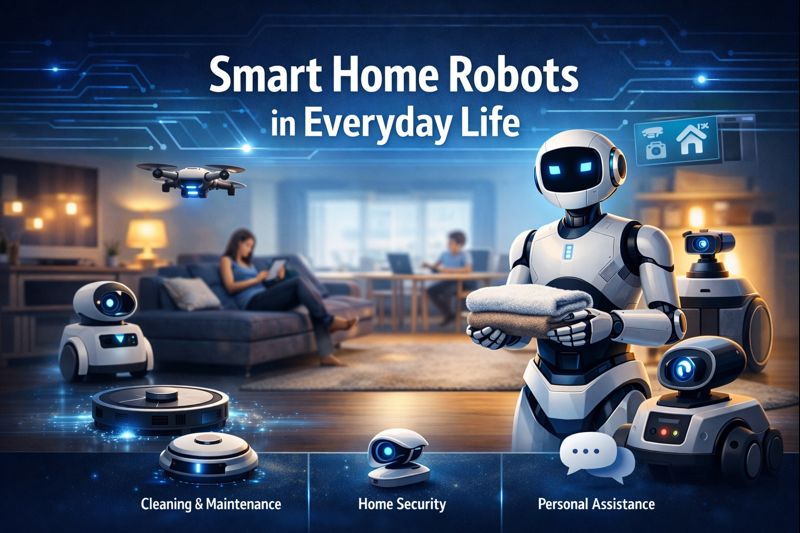
Smart technology has become a mainstay in American households, with one of the most intriguing developments being the rise of the “ponas robotas.” This concept of a household robot offers a glimpse into the future of domestic life. By integrating the ponas robotas into the daily routines of families across the United States, homeowners are achieving new levels of efficiency and transforming how everyday tasks are managed.
Understanding the New Wave of Home Robotics
Smart home robots are no longer mere gadgets; they have evolved into essential assistants that simplify life for homeowners, students, professionals, and parents alike. These machines are now common in American households, performing vital tasks such as floor cleaning, security monitoring, and automation assistance. The latest innovations in robotics combine artificial intelligence with practical functionality, allowing these machines to learn behaviors, recognize voice commands, and adapt to diverse environments.
As technology becomes increasingly accessible, a growing number of households are integrating robots into their daily lives. Demand continues to rise year over year as people seek out devices that save time and reduce daily stress.
Why Americans Are Turning to Smart Home Assistants
There is a rising demand for home automation technology across America. Smart speakers, thermostats, and security systems have laid the foundation for more advanced domestic tech. Robots fit naturally into this ecosystem because they automate chores that otherwise consume a considerable amount of time. For families juggling childcare, eldercare, or demanding work schedules, a smart robot serves as a vital source of support and efficiency.
Domestic Robots
As home robotics evolve, functionality and design are reaching new heights. These robots feature smooth, silent mobility and sophisticated obstacle avoidance. Additionally, integrated smart sensors enable some models to detect concentrated debris and target the dirtiest sections of a floor automatically.
Types of Robots Gaining Popularity in American Homes
Various robotic categories are currently gaining traction across the United States. While cleaning robots remain the most popular due to their ability to automate time-consuming floor care, other models serve as companions or smart home managers. These devices are especially valuable for large households or pet owners who require frequent vacuuming.
Beyond cleaning, security robots are an emerging category, patrolling properties and sending real-time alerts via mobile apps. These systems provide homeowners with constant surveillance and peace of mind without the recurring expenses of traditional security firms. Additionally, personal assistant robots have entered the market, offering the ability to answer queries and interact with other smart devices to enhance home functionality.
Integrating Robotics into the Contemporary American Lifestyle
Modern life in the U.S. is increasingly fast-paced, requiring people to juggle professional demands, family commitments, and personal ambitions. Smart robots serve as a practical tool to reduce the complexity of these daily routines. For instance, a robotic vacuum can maintain a home while the owner is at the office, while a personal assistant robot can provide vital reminders for appointments or medication.
Furthermore, these devices play a crucial role in supporting independent living for seniors. Equipped with advanced sensors and communication systems, these robots enhance safety by alerting family members or emergency services in the event of an accident, such as a fall.
The Future of Robotics in U.S. Homes
As technology evolves, the capabilities and personalization of domestic robots will reach new heights. Future robots will likely expand beyond cleaning and surveillance into more complex domains, such as meal preparation and the autonomous transport of objects. As artificial intelligence advances each year, the presence of these smart robots in American households is set to rise significantly.
Across the USA, scientists, businesses, and technology developers are working to improve human-robot interaction and lower costs. In the coming years, it is highly probable that having a household robot will become as common as owning a smartphone or a smart TV.
Conclusion
Smart home robots have officially entered mainstream life across the United States. As these robots continue to assist households with cleaning, security, and automation, they are demonstrating new ways to simplify modern living. The rise of the “ponas robotas” embodies this shift toward a more automated and optimized lifestyle, signifying how deeply technology is integrating into the domestic sphere to create smarter homes for American families.