
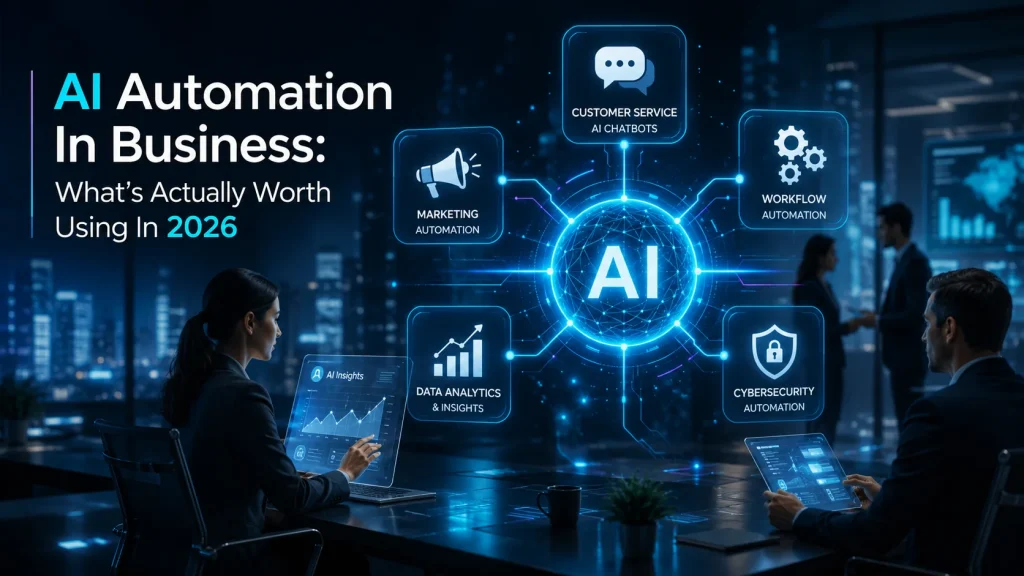
Right now, artificial intelligence isn’t just talk – it’s being used. By 2026, firms aren’t debating if AI is relevant. Instead, they’re focused on what actually helps, what drags things down. Across departments like service, promotion, running tasks, or handling money – AI quietly shifts daily routines. But hold on: plenty of teams still burn cash and hours hunting shiny tech that barely moves the needle.
The Shift From AI Experimentation to Practical Automation
Back then, folks just wanted to see what AI could do. Firms played around with bots and guesswork software – no real plan in mind. By 2026, things shifted. Now bosses care more about getting value and streamlining work.
Most of what machines handle now isn’t meant to push people out. It’s built to move things along faster when paired with how people decide. Sharp organizations see gains when pace meets insight, not just tech alone. Instead of handing everything over, they pick slow jobs full of numbers and repetition. Only there does the upgrade really show a difference.
Finding what works keeps companies from wasting money, instead they stick to methods that actually deliver.
AI Customer Service Automation That Delivers Results
These days, artificial intelligence handles customer support better than ever. Not long ago, bots followed rigid scripts without grasping meaning. Today’s versions pick up on what users really mean. Because of that, replies feel less robotic, more helpful.
By 2026, companies rely on chat-based artificial intelligence for booking meetings, answering questions about items, following up on purchases, also sorting out simple problems. Because of this, replies happen faster while service staff shift toward tougher client issues.
Yet here’s the twist – real progress hides in blending bots with real people. Speed wins attention, yet understanding cuts deeper once things go sideways. Complicated messes need a thinking mind, someone who listens instead of scripts.
For example, a healthcare clinic may use AI to answer booking questions and direct patients to the right service while ensuring that sensitive concerns reach trained staff. A dental practice promoting urgent care services such as an emergency dentist can benefit from AI-driven scheduling without compromising patient support quality.
Marketing Automation Powered by AI
These days, artificial intelligence shows up big in marketing. Not stuck with old ways of running campaigns by hand, companies lean into smart tools that handle strategy, write material, even find the right people to reach.
One step ahead, machine-driven tools for promotion study how people act online. These systems split users into groups based on habits instead of guesses. Messages shift form depending on who sees them, quietly adapting through email, social apps, or ads. Relevance grows when content feels made for one person only.
Key marketing applications include:
Personalized Email Campaigns
AI systems analyze purchase history, browsing behavior, and engagement patterns to deliver personalized email sequences. This level of customization increases open rates and conversion potential.
Predictive Audience Targeting
AI helps marketers identify high-value customer segments and predict which audiences are most likely to convert. This reduces wasted advertising spend and improves campaign performance.
Content Assistance Rather Than Full Replacement
AI writing tools remain valuable for outlines, brainstorming, and content optimization. However, businesses increasingly recognize that human oversight is essential for maintaining originality, brand voice, and credibility.
The strongest marketing strategies use AI as a creative assistant rather than a complete replacement for skilled writers and marketers.
AI Workflow Automation for Operations
Beyond customer engagement and marketing, AI automation is transforming internal operations.
Out of nowhere, workflow tools link different software, stopping the cycle of manual chores while cutting down mistakes. Thanks to artificial intelligence, companies handle billing, track stock, keep data current, and also streamline sign-offs.
This automation delivers several benefits:
- Faster operational processes
- Reduced manual errors
- Improved data accuracy
- Better cross-department coordination
- Lower administrative costs
Year after year, those sectors buzzing with endless deals find a break through smart software cutting labor time dramatically. Machines handling tasks once done by people free up entire teams across busy fields.
Take supply chain firms. They lean on artificial intelligence to spot possible hiccups ahead of time, then suggest detours when needed. Over in HR, paperwork for new hires gets handled without constant oversight, while shift planning adjusts itself piece by piece. The finance group? It moves faster through cost reviews, catching odd transactions before they grow into problems.
AI Data Analytics and Business Intelligence
Out of nowhere, numbers started mattering more than ever in how companies operate. Still, piles of data just sit there unless smart systems step in. With machines lending a hand, what once looked like chaos turns into clear direction. Clarity shows up when software digs through noise to find meaning.
What took place is usually the focus of standard reports. Why things unfolded that way comes clear through AI analysis, while upcoming patterns start coming into view.
In 2026, businesses rely on AI for:
Sales Forecasting
AI models identify trends and estimate future demand more accurately than manual forecasting methods.
Customer Behavior Analysis
Businesses gain clearer insight into purchasing patterns, customer churn risks, and loyalty drivers.
Decision Support
AI-generated recommendations assist leaders in evaluating pricing strategies, staffing requirements, and market opportunities.The most valuable analytics tools are not those producing endless dashboards. Instead, they highlight meaningful insights that support faster and more confident decisions.
AI Cybersecurity Automation is Becoming Essential
As digital operations expand, cybersecurity threats continue to grow. AI automation has become increasingly important for identifying and responding to security risks.
Modern AI security systems monitor networks continuously and detect unusual behavior patterns in real time. This allows organizations to identify threats before significant damage occurs.
Useful cybersecurity applications include:
- Automated threat detection
- Fraud monitoring
- Suspicious login identification
- Vulnerability analysis
- Incident response support
AI cannot eliminate cybersecurity risk entirely, but it strengthens defenses and reduces response times.
What is Not Worth Chasing in 2026?
Despite rapid progress, not every AI trend deserves investment.
Some companies still pursue automation projects without clear goals. This often results in expensive systems that create confusion rather than efficiency.
Common mistakes include:
Automating Broken Processes
AI cannot fix poorly designed workflows. Businesses should improve processes before automating them.
Fully Replacing Human Interaction
Customers still value human communication, especially for sensitive or high-stakes situations.
Buying AI for Publicity
Adopting AI solely for branding or trend-following rarely creates sustainable value.
Ignoring Governance and Ethics
Businesses must manage data privacy, transparency, and accountability carefully when deploying AI systems.
The smartest organizations adopt AI with discipline and measurable objectives.
Final Thoughts
AI automation in business is no longer about chasing futuristic promises. In 2026, the tools worth using are those that deliver clear operational improvements and support business goals. Customer service assistants, marketing automation, workflow management, data analytics, and cybersecurity platforms offer genuine value when implemented thoughtfully.