
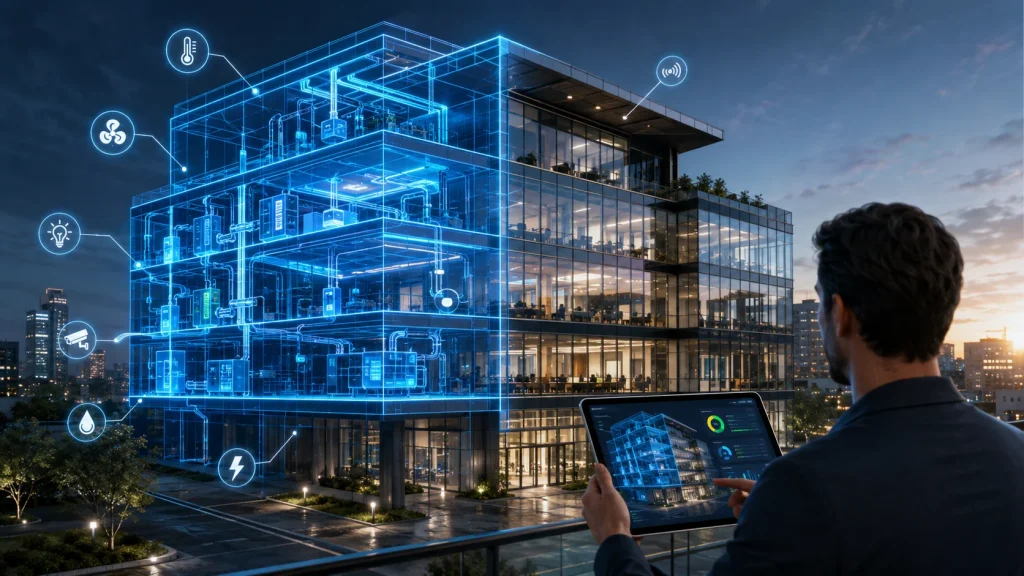
Buildings now change faster because tech updates how they get watched, fixed, or improved. One big shift comes from digital twins – virtual copies of actual structures that move and adapt. These models differ from old-school methods, which often depend on outdated data plus fix-it-later habits. Instead, live feedback flows through these duplicates, sharpening daily operations along with choices made behind the scenes.
Understanding Digital Twins in Property Management
A copy inside computers shows how a real building behaves, updated nonstop by live signals from the actual structure. From gadgets on walls to climate controls, it pulls details straight from tools, watching every move. Sensors feed updates, while old logs add context, shaping an exact reflection over time. Instead of guessing, decisions rely on what actually happens there each day.
Not like regular digital blueprints, these live models shift and change as new data flows in. Information on heat levels, power use, how full rooms are, machine efficiency, and even cracks or wear appears instantly. A sharp, reactive world takes shape – watching how structures act day by day without walking through each floor.
Enhancing Operational Efficiency
Imagine spotting issues before they become mess-ups – that is what happens when buildings get digital versions. Instead of waiting around for something to break, managers now watch systems act in real time. Fixing things early means less money wasted later. Downtime shrinks because alerts pop up way ahead of failure points.
Out of step patterns, digital replicas push upkeep into forecasting mode. When gear behavior gets studied nonstop alongside surroundings, odd shifts show up early – long before trouble strikes. HVAC units start revealing stress hints, just like lifts do. Light grids behave strangely sometimes, hinting at hidden drag. Pipes and water paths leak clues through subtle changes. Each part talks differently when strain builds.
Smarter Energy Management
Still, cutting energy waste matters most for those running properties, especially while green rules shift and public demands grow. Through digital replicas, teams see exactly where electricity flows inside structures – revealing hidden patterns. These models act like mirrors, reflecting real-time usage down to the smallest detail. Instead of guessing, managers adjust heating or lighting based on live feedback. Over time, small tweaks add up without changing infrastructure. Performance improves simply by understanding behavior. Such tools turn raw data into clear signals. Not magic – just smarter observation guiding everyday choices.
Picture this: adjusting light timers, tweaking climate controls, or shifting how spaces are used – all tested in a model before real-world changes. These tests show exactly how much energy shifts when routines change. Results guide choices backed by numbers, not guesses. Comfort stays steady even as power bills shrink. Real people feel the difference without noticing disruptions. For investors and operators involved in commercial real estate, the ability to improve energy performance while meeting sustainability goals offers a strong competitive advantage.
Improving Tenant Experience
Happy tenants often mean higher property value plus steadier rental fill-up. When digital replicas assist landlords, spaces tend to stay cozy, secure, and one step ahead. When something shifts indoors – temperature, airflow, a hum from the HVAC – a signal moves faster than footsteps through corridors. Problems show up on screens before they reach ears, skipping the lag between discomfort and report. A flicker in the ventilation gets seen at sunrise, not after hours. Alerts pop when patterns tilt off balance, nudging attention where it’s needed. Staff adjust systems while occupants stay unaware that anything was wrong.
Fixes happen mid-morning instead of next week. Quiet corrections replace urgent fixes down the line. Out here, digital twins shape better decisions about room use. When occupancy numbers show where people actually go – like lounges, conference spots, parking lots, or hallways – it becomes clear what works. Managers reshape floor plans based on real movement, not guesses.
Streamlining Renovations and Asset Planning
Surprisingly detailed digital models can ease renovation work. When changes happen on site, having a precise copy online keeps things moving. Budgets stay tighter because guesses get replaced with data. Some disruptions fade when teams rehearse steps ahead of time. A live model reacts as decisions shift, reducing surprises later. Instead of relying only on blueprints, workers compare real progress to what was planned. Even complex upgrades become clearer through constant feedback. Uncertainty drops when everyone sees the same version of the truth.
Imagine renovations before breaking ground – owners see changes clearly through digital models. Construction effects become obvious early, helping avoid costly surprises later. Instead of guessing, they test mechanical updates on screen first. Floor layouts shift easily in virtual space, revealing flaws ahead of time. Infrastructure tweaks get reviewed step by step without tearing walls open. Errors fade when plans live online first. Costs settle into view piece by piece, grounded in real data. Risk shrinks simply because mistakes show up earlier.
The Future of Property Management
As artificial intelligence, cloud computing, and smart building technologies continue to evolve, digital twins are expected to become standard tools within property management. Their ability to connect real-world performance with predictive analytics offers a level of visibility that traditional management methods cannot match.
Rather than simply maintaining buildings, property managers can actively optimise them. The result is a smarter, more sustainable, and more efficient property ecosystem that benefits owners, tenants, and investors alike.