
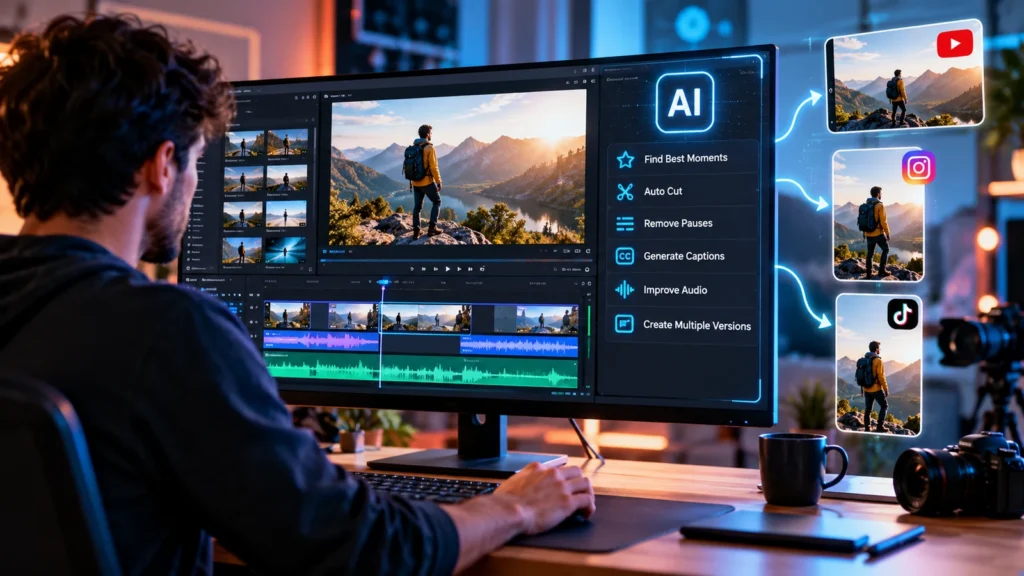
Video creation has become easier than ever.
You no longer need a huge production setup to create content. A phone, a good idea, and a little creativity can be enough to start.
But while recording videos has become simpler, editing them is still where many creators spend most of their time.
A single recording can turn into hours of work.
Finding the best moments, removing mistakes, adding captions, improving audio, creating different versions, and making sure everything flows properly all require time and attention.
The creative side of editing is still exciting. Choosing the right scene, building a story, and creating something people connect with is what makes video editing special.
The challenge is everything that comes before that.
This is where AI is starting to change the way we approach video editing.
Why Video Editing Takes So Much Time
Editing has always been a combination of creativity and execution.
The creative side includes storytelling, pacing, and deciding how a video should feel.
The execution side includes the repetitive tasks:
- Reviewing hours of footage
- Comparing different takes
- Cutting unnecessary sections
- Organising clips
- Adding captions
- Fixing audio
- Creating multiple versions
For professional editors and creators, these tasks are necessary, but they can also slow down the process.
This is especially true for people creating content regularly.
A YouTube creator might record a one-hour video and spend several more hours turning it into a polished final version.
A podcast creator might need to transform one conversation into multiple clips.
A business might need the same video adapted for different platforms.
As the demand for video increases, creators need better ways to manage the editing process.
How AI is Becoming Part of Video Editing
AI is changing video editing by helping with some of the tasks that traditionally take the most time.
Modern AI editing tools can help creators:
- Find important moments in footage
- Create initial cuts
- Remove repetitive sections
- Generate captions
- Improve audio quality
- Create different versions of content
The goal is not to remove the creative role of the editor.
Instead, AI helps reduce the repetitive work so creators can focus on making better decisions.
Moving From Editing Tools to Editing Assistants
For many years, video editing software has focused on giving creators more control.
More effects.
More timeline options.
More precise adjustments.
These tools are powerful, but the workflow still depends heavily on the editor manually completing every step.
AI introduces a different approach.
Instead of only providing tools, AI can help complete parts of the editing process based on instructions.
This is where invideo editor brings a different idea to the workflow.
Invideo Editor combines a professional editing timeline with AI editing agents that can be assigned real editing tasks. Creators provide direction, the AI agents handle assigned work, and the editor can continue reviewing and refining the project.
The important part is that the creator stays involved.
AI helps with execution, but the creative control remains with the person making the video.
The Role of AI Editing Agents
One of the biggest developments in AI video editing is the introduction of AI agents.
Instead of using AI for only one small action, creators can now assign broader editing tasks.
For example, an AI agent can help review footage, identify usable sections, remove repeated moments, and create a starting version of a timeline.
Invideo Editor uses this approach through agentic assembly.
The AI reviews footage, selects usable takes, removes unnecessary material, and creates an editable base cut that creators can continue working on.
A base cut is not the final video.
It is the first complete version of the timeline where the main structure is already created.
This gives creators a better starting point and reduces the time spent preparing footage.
Choosing the Right AI Video Editing Tool
The best AI editing tool depends on what you want to create.
For creators working with short social media videos, the priority might be quick cuts, captions, and resizing content for different platforms.
For YouTube creators, podcasters, and editors working with longer footage, the focus may be reducing repetitive tasks like reviewing clips, removing pauses, and building an initial timeline.
This is where AI-powered platforms can make a difference. Tools like invideo’s AI video editor can help creators speed up repetitive editing tasks while still allowing them to guide the final result.
With invideo editor, creators can use AI editing agents to handle parts of the workflow, such as reviewing footage, selecting usable moments, and creating a base cut that can be refined manually.
The important part is that AI does not remove creative control. It helps creators spend less time on repetitive work and more time improving the story.
AI Does Not Replace the Creative Side
One of the biggest questions around AI editing is whether it will replace human creativity.
I do not think that is where the value is.
A good video is not only about cutting clips together.
It is about understanding emotion, pacing, and the message behind the content.
An AI tool can help organise footage.
It can help remove repetitive work.
It can help create a first version.
But the final creative choices still come from the person behind the video.
The editor decides what moments matter.
The editor decides what the audience should feel.
The editor shapes the final story.
How Invideo Editor Fits Into the Future of Editing
The future of video editing will likely involve a combination of human creativity and AI assistance.
Tools like invideo editor are built around this idea by helping creators handle the operational side of editing while keeping the project editable.
Creators can review changes, adjust the timeline, and continue shaping the final result themselves.
This type of workflow can be especially useful for people who create content frequently and need to produce more videos without spending all their time on repetitive editing tasks.
The biggest advantage is not simply speed.
It is having more time for creativity.
What the Future of Video Editing Could Look Like
Video editing has always evolved with new technology.
Better cameras changed how creators captured footage.
Better software changed how they edited.
Now AI is changing how they approach the workflow itself.
Instead of spending hours preparing every small part manually, creators can start thinking more like directors.
- They can explain the vision.
- Review the results.
- Make creative decisions.
- And spend less time on tasks that slow down the process.
Invideo Editor represents this shift by bringing AI assistance into the editing timeline rather than separating it from the creative workflow.
Final Thoughts
AI is changing video editing because it solves one of the biggest problems creators face: there is often more footage than time.
The future is not about AI creating everything without human input.
It is about giving creators better tools to work with.
The best videos will still come from ideas, creativity, and storytelling.
AI simply helps creators spend less time on repetitive tasks and more time making content that matters.
For anyone creating videos regularly, learning how to work alongside AI could become one of the most valuable skills in modern video production.