
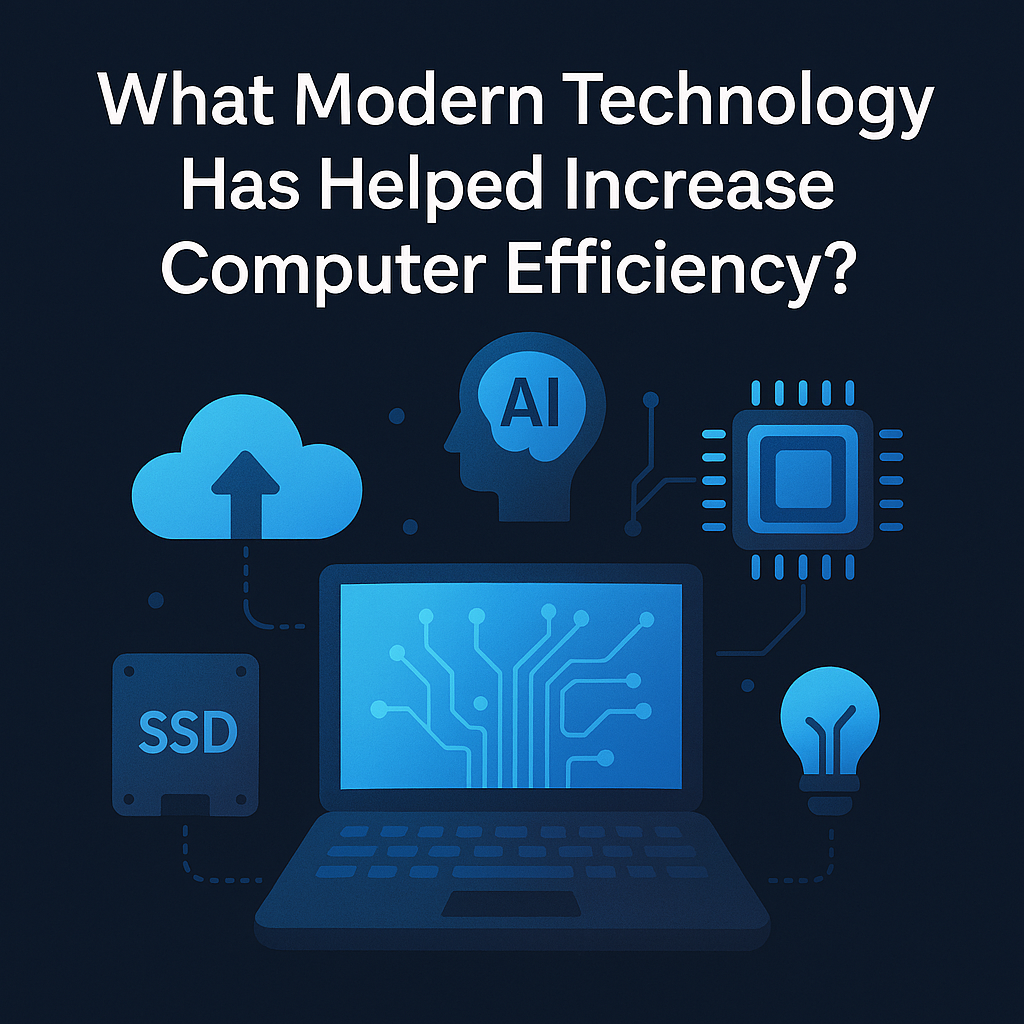
In today’s fast-paced world, technology continues to play a pivotal role in enhancing the efficiency and capabilities of computers. By incorporating cutting-edge developments, computers have become more powerful, user-friendly, and capable of performing complex tasks quickly. This article delves into the modern technological breakthroughs that have significantly contributed to increased computer efficiency.
As we dive deeper into the realm of computer technology, it’s essential to acknowledge how these advancements have impacted various industries. Notably, the rise in demand for skilled professionals has led to a growth in job opportunities. According to Zippia, over 82,794 computer repair technicians are currently working in the United States, spotlighting a workforce dedicated to maintaining and improving computer performance.
Additionally, advancements in technology have not only boosted the efficiency of individual computers but have also transformed entire industries. The resulting ripple effects have seen other sectors embracing technological innovation to remain competitive, agile, and efficient. This article will explore some key technological advancements that have drastically improved computer efficiency and how they continue to shape the future.
Emergence and Impact of Cloud Computing
One of the revolutionary technologies that have significantly enhanced computer efficiency is cloud computing. By migrating data and processing tasks to the cloud, businesses can enjoy scalable resources and enhanced data security. This approach not only reduces the strain on local computing resources but also facilitates easy collaboration among remote teams, leading to improved productivity.
The flexibility offered by cloud computing has also enabled organizations to quickly adapt to changing business needs. With on-demand access to vast computing power, companies can efficiently run complex simulations, data analyses, and other resource-intensive tasks without the need for expensive hardware investments. Moreover, cloud computing services have democratized access to advanced technology, allowing even small businesses to leverage high-end computing capabilities.
As technology continues to evolve, cloud computing is expected to become even more integral to the modern digital landscape. The increasing adoption of hybrid cloud solutions signifies a growing trend towards optimizing computing efficiency by balancing on-premises and cloud resources. This paradigm shift is poised to offer organizations the best of both worlds, driving further advancements in computer efficiency.
Role of Artificial Intelligence and Machine Learning
Artificial Intelligence (AI) and Machine Learning (ML) have had a transformative impact on computer efficiency. These technologies facilitate automation and optimization by enabling computers to learn from data, identify patterns, and make informed decisions. AI-powered applications enhance productivity across numerous sectors, such as healthcare, finance, and retail, by automating routine tasks and providing valuable insights.
Furthermore, AI and ML have brought about significant improvements in software development processes. Developers can now leverage AI-driven tools to optimize coding practices, detect vulnerabilities, and automate testing procedures, ultimately resulting in more reliable and efficient software. This integration of AI into software development has led to reduced time-to-market and increased innovation, driving further technological progress.
As AI and ML technologies advance, their potential to boost computer efficiency continues to grow. With ongoing research and development, the capabilities of these technologies are expected to expand, offering even more sophisticated solutions to complex challenges. By investing in AI-driven advancements, organizations can position themselves at the forefront of technological innovation, ensuring sustained efficiency and competitiveness.
Significance of Hardware Innovations
Hardware innovations have played a crucial role in augmenting computer efficiency. The development of faster processors, such as multi-core CPUs and GPUs, has revolutionized computing by enabling parallel processing and improved performance. These powerful components allow computers to handle demanding tasks, such as gaming, scientific simulations, and video editing, with ease.
Additionally, advancements in storage technology, including Solid-State Drives (SSDs), have significantly improved data access speeds. SSDs provide faster boot times and reduced data retrieval latency, enabling seamless multitasking and enhancing overall user experience. As storage technology continues to evolve, the benefits of increased efficiency and reliability are expected to extend to a wide range of devices.
The integration of laser technology into manufacturing processes has further contributed to improved efficiency. According to JPS International, laser technology continues to dominate in 2025, with manufacturers leveraging its precision and efficiency to enhance production processes. These hardware innovations underscore the importance of continued investment in research and development to maintain and elevate computer efficiency.
Future Prospects of Technology in Enhancing Efficiency
Looking ahead, the future of technology in enhancing computer efficiency is filled with exciting possibilities. Emerging trends such as quantum computing hold the promise of unprecedented processing power, enabling breakthroughs in fields previously thought to be unattainable. Quantum computers have the potential to solve complex problems in seconds, revolutionizing industries such as cryptography, drug discovery, and climate modeling.
Furthermore, 5G technology is expected to facilitate faster and more reliable data transmission, opening doors to new possibilities in areas such as autonomous vehicles and the Internet of Things (IoT). This technological leap is anticipated to drive efficiency across various sectors, streamlining operations and creating new opportunities for growth. As these technologies mature, their impact on computer efficiency is poised to be transformative.
According to IBISWorld, the revenue of the U.S. computer and printer leasing industry is expected to reach $4.0 billion in 2025. This indicates a significant demand for technological advancements that enhance computer efficiency. Continued collaboration between academia, industry, and government will be essential in realizing the full potential of these technologies and ensuring a future driven by innovation and efficiency.