
Interest in space technology is growing across the world. This boom is happening because it is no longer just government space programs; private companies, start-ups, and even large businesses are beginning to consider launching their own spacecraft and satellites too. The number of newcomers entering the industry is increasing, and investors are spotting prospects in it and considering sincere contributions. With developments shifting at a very fast pace, investors are required to understand and consider the prospect of early-stage investment in the sector. The signs indicate that there are considerable upcoming investment possibilities in function, systems, and effective communication.
Satellite Development and Applications
One of the prominent opportunities in the space sector is satellite development. Small satellites are reshaping the scene; they are quicker and more efficient than the aging satellites. As they are easier to build and assemble, these new mini-satellites could give rise to new businesses that will furnish communication services to remote regions, observe land and sea resources, or even provide early warning for natural calamities. They assist farmers to improve outputs or help scientists to monitor climate change. As many small satellites are launched, they will form large networks known as constellations, which have greater communication and coverage and might even be self-sustaining in the future. These developments can open up a market worth billions of dollars and are useful in various sectors from navigation to environmental analysis.
Launch Services and Supporting Infrastructure
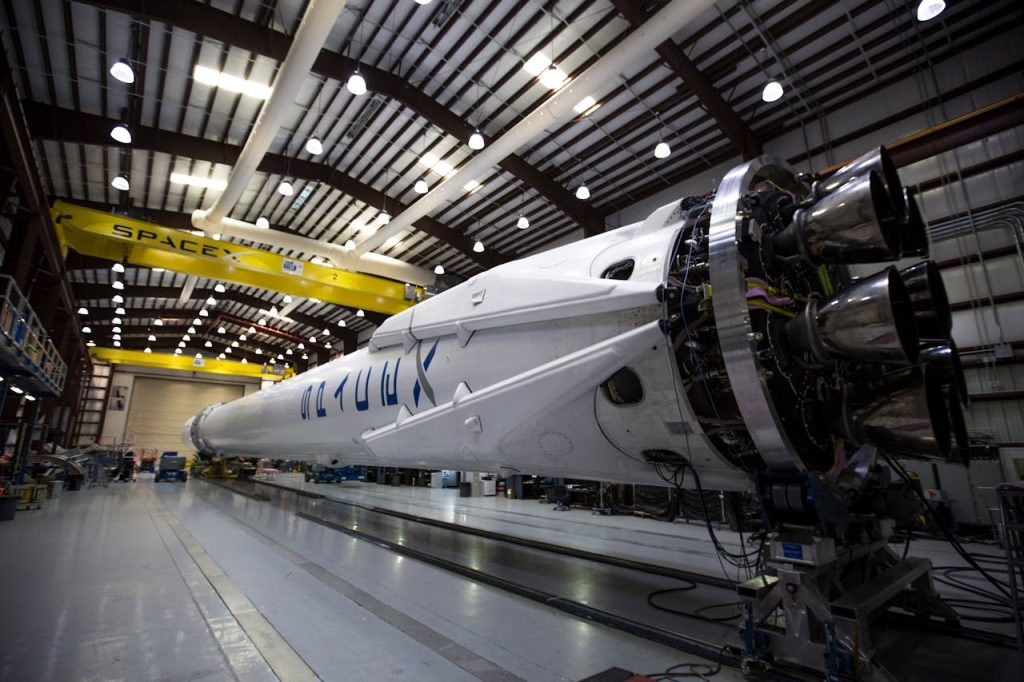
The sector of launch service business is also expanding with the increasing demand for smaller launch systems in a rapidly shifting ecosystem. Entrepreneurial start-ups are providing flexible launch alternatives, bringing down time and prices, while some are establishing local ground support facilities to assist new commercial ventures. Rocket technology is getting cheaper and more efficient due to creative engineering, enabling more launches at lower costs. There is a lot of interest in reusable rockets, which are like airplane tickets, getting people to space again after service. These advancements are not just simple launch solutions; they are establishing the groundwork for a very vibrant transition into the space industry.
Human Presence and Space Habitats
The prospects of establishing human outposts in space also intrigue investors. These range from modular habitats in low Earth orbit to experiments on the International Space Station focusing on space agriculture and life support systems. For example, space agriculture can be a critical solution for producing food in a closed or limited environment. The NASA Artemis program will have new crewed lunar bases building some of the most valuable experience on living in space. All this is supported by a growing partnership between the private and public sectors, driving innovation. The small steps today may result in long-term potential for further prospects in manned space operations in the future.
Expanding Markets within the Space Economy
The future of the space sector includes a wide-range of applications. That is not just supporting technology in the celestial realm; it is bringing space-tech into daily life through advanced sensors in agriculture or global analytics in commercial activities. The space mining ideas are promising because they provide rare metals and minerals that could solve the Earth’s shortage. In addition, a lot of businesses are taking part in the hot air of space tourism and space travel, which include visiting the Moon or floating above the Earth. A major investment is also coming in the planning of services that link things and make them work together. All of these activities are fueling the growth of the space economy, creating fresh opportunities for investors and innovators alike. The increased application of space technology is only going to boost, establishing a broad base of possibilities for the new-visioned stakeholders.
Emerging Technologies with Long-Term Impact
Finally, a number of new emerging technologies are capable of changing the game in space affairs. Cutting-edge propulsion systems make provisions to travel further and faster, and robotics are now being programmed and employed in incredibly fragile, distance-driven tasks. Artificial intelligence can observe a spacecraft, make judgments, and adapt to changes immediately. In hazardous climates, new processing materials are being built to endure extreme temperatures and pressures. Some of these innovations could redefine how structures and tools will be employed in the future. Making a call on their potential earlier could position an investor to gain big when movement occurs.
Conclusion
Many lucrative areas are waiting to be tapped in early-stage investments in space technology. These include new rockets, mini-satellites, lunar habitats, and satellite to smartphone technology. These opportunities are coming to light because of new technologies and changing private sector expectations. However, these investments need caution in balancing possibilities and danger. They also require solid decision-making, a timely manager and the right working partnership. The emerging paradigm of cosmic enterprises is promising and it empowers you to be a partner in what is going on tomorrow.