
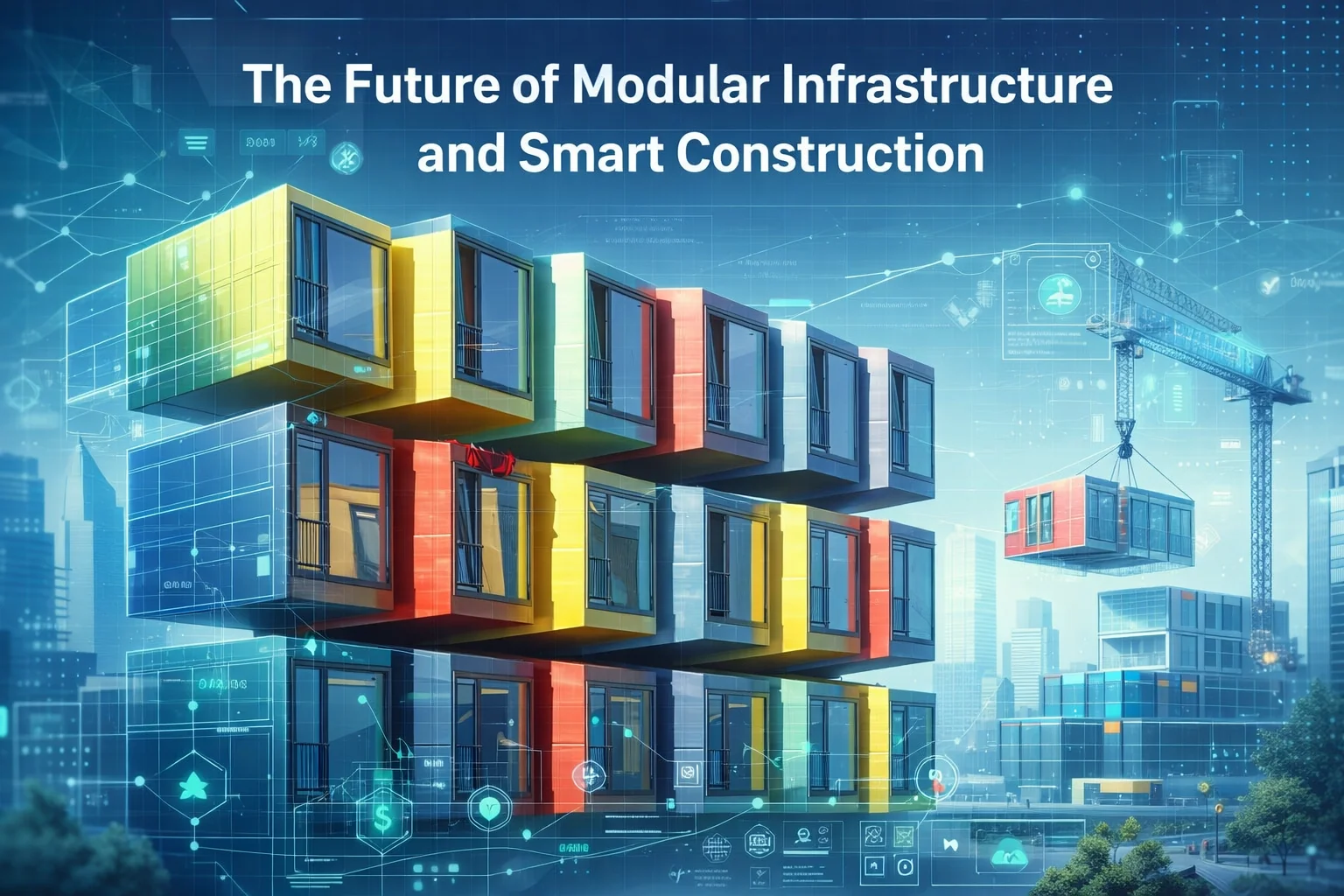
Across industries, infrastructure demands are changing faster than traditional construction methods can comfortably support. Businesses, governments, and communities need solutions that can adapt quickly, scale efficiently, and respond to shifting economic and environmental pressures. Modular infrastructure has emerged as a practical answer to these challenges, offering flexibility without sacrificing durability or performance.
Rather than building everything from the ground up on site, modular infrastructure relies on prefabricated components that can be assembled, relocated, or repurposed as needs evolve. This approach is redefining how spaces are designed and deployed, from commercial facilities and housing to storage, utilities, and emergency response systems.
Speed and Flexibility in a Changing World
One of the strongest advantages of modular infrastructure is speed. Traditional construction projects often involve long timelines, weather delays, and labor coordination challenges. Modular systems are manufactured off site in controlled environments, allowing site preparation and fabrication to occur simultaneously.
Once delivered, these components can be installed quickly, reducing downtime and disruption. This speed is especially valuable for industries that cannot afford long interruptions, such as logistics, healthcare, and manufacturing.
Flexibility extends beyond initial installation. Modular structures can be expanded, reconfigured, or relocated as operational needs change. This adaptability allows organizations to respond to growth, seasonal demand, or unexpected events without committing to permanent construction.
Cost Efficiency and Predictable Investment
Budget predictability is another key driver behind modular adoption. Traditional construction projects are vulnerable to cost overruns caused by labor shortages, material price fluctuations, and unforeseen site conditions. Modular infrastructure offers greater cost control through standardized design and manufacturing processes.
Upfront costs are often lower, and long-term expenses are easier to forecast. Maintenance and upgrades can be planned more efficiently since modular components are designed for replacement or modification rather than demolition.
This financial predictability appeals to both private companies and public sector organizations. When infrastructure investments can scale alongside demand, capital is allocated more strategically and risk is reduced.
Sustainability Through Reuse and Reduced Waste
Sustainability is no longer optional in infrastructure planning. Modular systems support environmental goals by reducing construction waste and encouraging reuse. Components are manufactured with precision, minimizing excess materials compared to on-site builds.
The ability to relocate and repurpose modular units extends their lifespan. Instead of tearing down structures when needs change, modules can be reused in new locations or adapted for different purposes. This approach conserves resources and reduces landfill impact.
In many applications, modules such as new and used shipping containers are repurposed into offices, storage units, or utility spaces. Their durability and standardized dimensions make them well suited for modular projects while supporting circular use of existing assets.
Scalability for Growing and Temporary Needs
Modular infrastructure excels in environments where demand fluctuates. Growing businesses can start with a small footprint and add modules as operations expand. Temporary facilities can be deployed quickly and removed when no longer needed.
This scalability is particularly valuable in sectors such as construction, energy, and disaster response. Temporary housing, mobile clinics, and field offices benefit from infrastructure that is easy to deploy and just as easy to remove.
Scalable design also supports experimentation. Organizations can test new locations or service models without committing to permanent structures. If a project succeeds, modular infrastructure grows with it. If priorities change, resources are not locked into unused buildings.
Consistency and Quality Control
Manufacturing modular components in controlled environments improves quality consistency. Weather, site variability, and on-site constraints often affect traditional builds. Modular production allows for standardized processes, inspections, and quality assurance.
This consistency reduces defects and improves performance across installations. Electrical, plumbing, and structural systems are tested before delivery, lowering the risk of post-installation issues.
For organizations operating multiple locations, standardized modular designs simplify training, maintenance, and compliance. Teams know what to expect, and systems behave predictably across sites.
Supporting Resilience and Emergency Preparedness
Resilience has become a priority in infrastructure planning. Modular systems support rapid response in emergencies by enabling quick deployment of critical facilities. Healthcare units, shelters, and command centers can be mobilized where they are needed most.
Because modules are transportable, they can be repositioned as conditions change. This mobility is especially valuable in regions affected by natural disasters or humanitarian crises.
Long term resilience also benefits from modular design. Infrastructure can evolve alongside climate considerations, population shifts, and technological advancements without requiring full replacement.
Conclusion
Modular infrastructure represents a shift toward smarter, more responsive building practices. Its speed, flexibility, cost efficiency, and sustainability align with the demands of a rapidly changing world. Rather than committing to rigid structures, organizations gain the freedom to adapt as needs evolve.As industries continue to prioritize agility and resilience, modular infrastructure offers a practical path forward. By rethinking how spaces are built and used, modular solutions are shaping the future of infrastructure in ways that are efficient, sustainable, and ready for what comes next.