
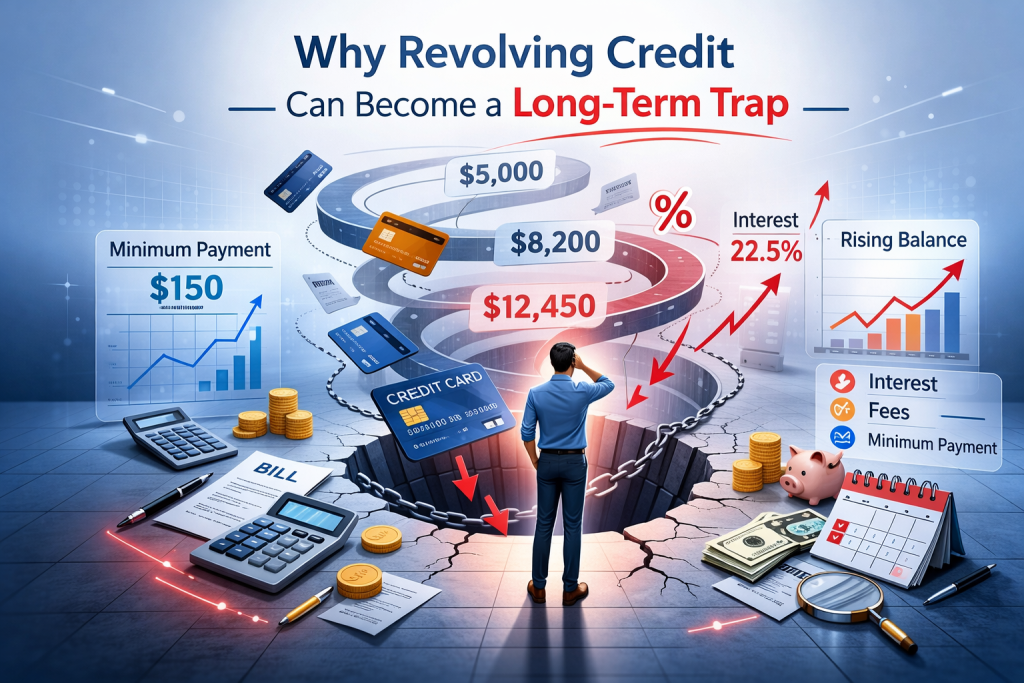
Revolving credit is often marketed as flexibility. You can use it when you need it, make a payment later, and keep your finances moving forward. For many consumers, credit cards feel like a practical safety net, especially when unexpected expenses come up or income fluctuates. Over time, however, that flexibility can quietly turn into something far more restrictive.
From this perspective, revolving credit does not become a problem because people misuse it. It becomes a long-term trap because of how it is designed. Minimum payments, compounding interest, and balances with no clear end date work together in subtle ways that are easy to overlook. This is why many consumers eventually explore options like credit card debt relief services after years of doing what they believed was responsible borrowing.
Understanding why revolving credit lingers helps explain why balances remain stubbornly high even after spending slows or stops. In many cases, the issue is not behavior. It is the math behind the system.
What Makes Revolving Credit Structurally Different
Unlike installment loans that have a fixed payoff schedule, revolving credit has no built-in finish line. As long as the minimum payment is made, the account stays open and active. This creates the sense that progress is being made even when the balance barely changes.
That open-ended structure is what makes revolving credit so easy to live with and so hard to escape. Without a defined endpoint, urgency fades and repayment stretches further into the future.
How Minimum Payments Slow Progress
Minimum payments are designed to keep accounts current, not to eliminate balances efficiently. They are typically calculated as a small percentage of the balance plus interest. This keeps monthly payments manageable, which feels helpful during tight periods.
The downside is that affordable payments come at the cost of time. Paying only the minimum can extend repayment for decades. Even when no new charges are added, the balance declines slowly because so much of each payment goes toward interest rather than principal.
The Compounding Effect of Interest
Interest does most of the heavy lifting in revolving credit. Because interest compounds, charges build on top of previous interest when balances remain unpaid. High interest rates amplify this effect, especially when balances are already large.
Even small rate differences can translate into thousands of dollars over time. When payments barely exceed the interest being charged, progress becomes almost invisible. The Consumer Financial Protection Bureau explains how credit card interest and minimum payments affect long-term repayment, and seeing those numbers laid out often changes how people view their debt.
Why Balances Stay High After Spending Stops
Many people are frustrated to find that balances remain high even after they stop using their cards. This happens because interest, not spending, becomes the primary driver of the balance.
At that point, good habits prevent the situation from worsening, but they do not guarantee improvement. The account shifts into maintenance mode, where effort keeps things stable without creating real momentum. This is often when people feel stuck despite doing everything right.
The Subtle Cycle of Reuse
Revolving credit is designed to be reused. As payments are made, available credit reappears, which makes it tempting during lean months or emergencies. Using the card again feels harmless, especially when the balance already exists.
Over time, this pattern keeps the balance alive even when intentions are good. Progress made during one month can be undone the next, extending the timeline without any dramatic misstep.
Why Time Favors the Lender
Time works against the borrower in revolving credit. The longer a balance exists, the more interest accumulates. Even consistent payments become expensive over extended timelines.
What may have started as a manageable purchase slowly turns into a long-term financial obligation. Because this happens gradually, the true cost is easy to underestimate.
The Role of Emotional Fatigue
Carrying revolving debt for years takes an emotional toll. Monitoring balances, making payments, and seeing minimal progress can be exhausting. Over time, fatigue sets in and engagement drops.
Statements may go unopened. Decisions get delayed. The debt becomes background noise rather than an active problem to solve. While avoidance does not create the trap, it makes escaping it far more difficult.
Why Higher Income Does Not Always Fix It
Many people assume that earning more money will naturally eliminate revolving debt. While higher income can help, it does not guarantee resolution. Lifestyle expenses often rise alongside earnings, and without a structural change in repayment, extra income may be absorbed by interest and minimum payments.
This disconnect surprises people who expected raises or bonuses to make a bigger difference than they do.
Revolving Credit Thrives on Uncertainty
Life is unpredictable. Medical bills, car repairs, and job changes happen without warning. Revolving credit fills these gaps quickly, reinforcing reliance on it as a solution.
Each new use resets progress and extends repayment timelines. Over time, revolving credit becomes resilient in the worst possible way, adapting to uncertainty while deepening dependency.
Why Awareness Often Comes Late
Because minimum payments normalize the experience, many consumers do not realize how trapped they are until years have passed. Monthly statements make the debt feel manageable even as the total cost climbs.
It is often only when totals are added up or payoff timelines are calculated that the reality becomes clear. The Federal Trade Commission offers consumer education on credit and debt, helping consumers better understand how revolving credit behaves over time.
Escaping the Trap Requires Structural Change
Breaking free from revolving credit usually requires more than spending less. It often means changing the structure of how the balance is handled, whether through consolidation, restructuring, or other approaches that create a clear path forward.
Effort alone is rarely enough when the system itself is working against progress. Recognizing this is not a failure. It is clarity.
Why Revolving Credit Feels So Normal
Revolving credit is widely used and socially accepted, which masks its long-term impact. Because so many people carry balances, it feels manageable by default.
Common does not mean harmless. Understanding this distinction helps consumers evaluate their situation more honestly.
A Clearer Understanding of the Long-Term Trap
Revolving credit becomes a long-term trap not because consumers are careless, but because the system is designed to persist. Minimum payments reduce urgency, compounding interest increases cost, and open-ended timelines delay closure.
Seeing revolving credit clearly shifts the conversation away from blame and toward structure. When people understand why balances linger, they are better equipped to recognize when flexibility has turned into friction and to decide what kind of change is needed to move forward.