
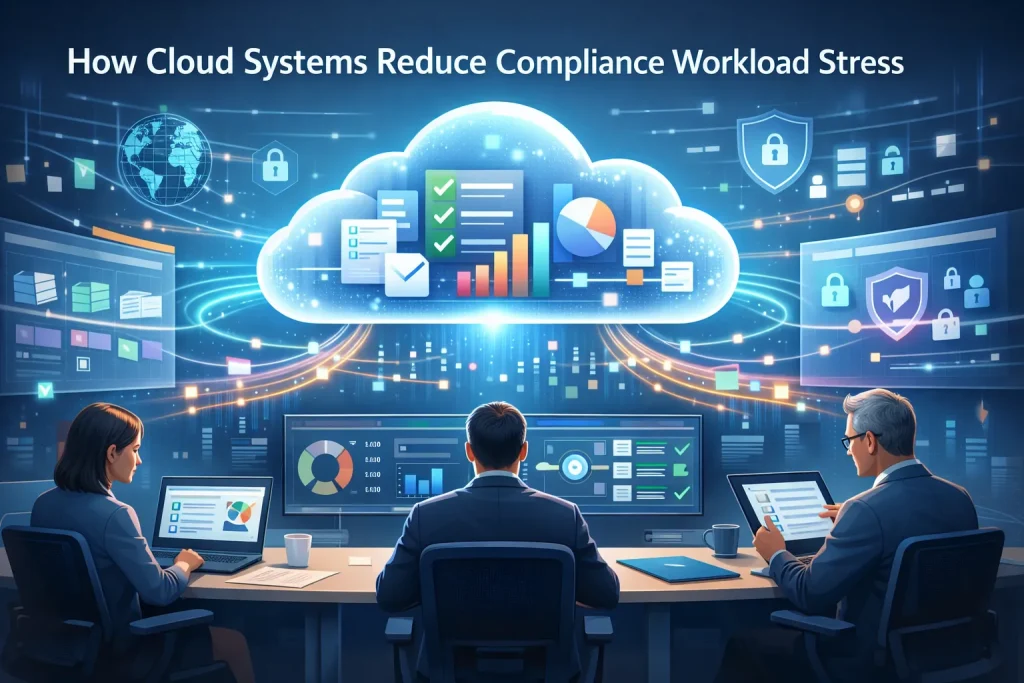
Compliance requirements have expanded in scope, speed, and scrutiny, leaving many finance and compliance teams stretched thin. Filing windows are shorter, data models are more complex, and controls must be maintained across distributed systems and stakeholder groups. Cloud systems are helping organizations reduce this workload stress by centralizing data, automating routine tasks, and offering scalable capabilities that align with evolving regulations. By shifting from manual, fragmented processes to integrated platforms, teams can achieve accuracy and timeliness with less friction, while creating room for analysis and strategic decision making.
Centralized Data Reduces Reconciliation Pressure
One of the most significant sources of compliance stress is data fragmentation. When financial, operational, and risk data live in separate systems, teams spend valuable time exporting files, reconciling figures, and resolving inconsistencies. Cloud platforms address this head on by providing a unified data layer that consolidates records from ERP, procurement, payroll, and subsidiary systems into a common model. With integrations that run continuously, the platform becomes the single source of truth for reporting and control activity.
This centralization improves efficiency in several ways. First, it eliminates version confusion that often arises when spreadsheets and reports proliferate across email and shared drives. Second, it enables standardized rules for categorization and consolidation, which reduces manual interpretation and error rates. Third, it allows teams to detect and correct discrepancies early in the cycle rather than discovering them at period end. The outcome is fewer late nights dedicated to reconciliation and a smoother path to compliant filings.
Automation Streamlines Controls and Evidence Collection
Routine compliance activities are time consuming, yet critical. Control testing, documentation, approvals, and audit evidence collection can monopolize staff hours if performed by hand. Cloud systems embed automation directly into these workflows. Reconciliations can run on schedules or triggers, exceptions are flagged instantly, and approval routing follows predefined logic. Evidence is captured at the point of action with user, timestamp, and context, which strengthens the audit trail without additional effort.
Automation also improves quality. By reducing manual data entry and repetitive tasks, teams decrease the risk of error and omission. Automated certifications and policy attestations remind the right people at the right time, while dashboards track completion and escalate delays. When auditors request support, cloud systems can produce complete documentation rapidly, minimizing disruption. The real benefit is reclaimed time. Staff can redirect energy from administrative tasks to interpreting results, assessing root causes, and improving processes, which further reduces future workload.
Real-Time Visibility Supports Proactive Compliance
Stress often spikes when issues surface late. Cloud platforms alleviate this by providing continuous visibility into compliance health. Real-time dashboards display key indicators such as control performance, user access changes, segregation of duties conflicts, and policy exceptions. Teams see trends as they form and can intervene before problems escalate into reportable deficiencies.
This immediacy supports better decision making. Leaders can review readiness across entities, geographies, and functions, then allocate resources to the areas with the greatest exposure. Period-close activities become more predictable because there are fewer surprises and less rework. Real-time visibility also enables rolling disclosures and scenario analysis, which is increasingly important as regulations change midyear or new disclosure frameworks are introduced. When the status of controls and data quality is always clear, compliance ceases to be a last-minute scramble and becomes a manageable, ongoing discipline.
Built-In Security and Access Governance Reduce Risk
Compliance obligations extend beyond numbers to the integrity of the systems that produce them. Cloud platforms provide built-in security features that reduce risk and simplify oversight. Role-based access controls ensure users only see and act on what is necessary. Fine-grained permissions support segregation of duties and help prevent conflicting roles from being assigned inadvertently. Centralized identity management and audit logs record every access change and sensitive action, creating transparent, defensible records for internal and external reviews.
Encryption at rest and in transit, automated backups, and resilient architectures further protect data and ensure continuity. For organizations that operate across multiple jurisdictions, cloud providers support data residency and retention policies that align with local requirements. These capabilities reduce the manual effort required to enforce security controls and produce evidence, which lowers both risk and workload. In short, strong security foundations enable smoother compliance with less friction.
Sector-Specific Capabilities for Public and Regulated Entities
For public sector and heavily regulated organizations, compliance pressure is amplified by unique standards, funding models, and reporting obligations. Cloud systems designed with these needs in mind can significantly reduce effort. Fund accounting, encumbrance tracking, and grant compliance features map directly to the way these organizations operate. Integrated reporting templates align with statutory formats, while workflow rules reflect approval hierarchies and thresholds common in oversight environments.
Many organizations also complement their platforms with specialized advisory support such as government accounting services. This combination helps teams interpret evolving standards, structure charts of accounts to reflect regulatory expectations, and configure controls that satisfy auditors and oversight bodies. With the right technology and expertise, public and regulated entities can improve timeliness, accuracy, and transparency while easing the day-to-day workload on finance and compliance teams.
Scalable Architecture Adapts to Change Without Rework
Regulatory change is constant. New disclosure requirements, sustainability metrics, and industry-specific rules can arrive with little lead time. Cloud architectures reduce the stress of change by enabling configuration over customization. Data fields, calculation logic, and report layouts can be updated centrally and applied consistently across business units. Integration layers absorb upstream system changes without breaking reporting pipelines.
Elastic capacity also matters. During peak periods such as quarter end, cloud resources scale to handle higher volumes of transactions, validations, and report generation. Teams avoid the performance bottlenecks that increase close times and create unnecessary pressure. Because the environment adapts on demand, organizations can sustain compliance quality even as they grow in complexity and scale.
Conclusion
Cloud systems reduce compliance workload stress by unifying data, automating routine controls, and delivering continuous visibility into compliance health. Built-in security and access governance simplify oversight and strengthen evidence. Purpose-built capabilities and specialized expertise support public and regulated entities with complex requirements. Finally, scalable, configurable architectures make it easier to adapt as rules evolve and business needs change. By embracing cloud-based compliance, organizations transform a historically reactive process into a predictable, proactive capability that supports accuracy, speed, and confidence across the enterprise.