
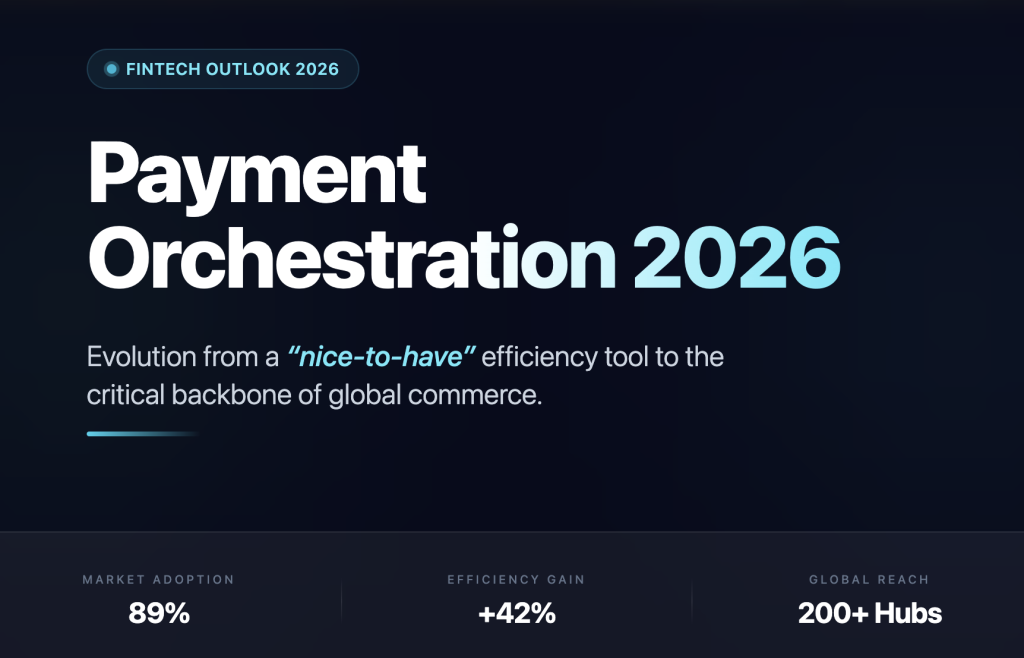
Today we are speaking with a practitioner who knows the inner workings of payments not from presentations but from code and architectural decisions. Our guest is Mike Davydov, Founder at LeaSoft and Co-Founder at Spinorium. For over 7 years Mike has been building SaaS backends, payment gateways, and orchestration systems for clients across Europe and the world. Drawing on the latest experience from H2’25 and industry leader reports, we explore why simply accepting payments is a path to loss in 2026.
The 2025 Trap and the New Reality
According to Mike Davydov, 2025 was a sobering year for the fintech industry. The market officially moved past the era of hype into an era of peak efficiency. While companies previously boasted about transaction volumes, the focus in 2026 has shifted to margins and outcome, the final result.
Today the payment stack has evolved from a technical necessity into a strategic profit engine. Mike emphasizes that companies still relying on a single Payment Service Provider (PSP) risk losing up to 20% of potential revenue due to technical failures and inefficient routing. In this environment, payment orchestration is no longer just an advantage but a foundation for survival.
The 5 Pillars of Payment Orchestration in 2026
1. From Routing to Trust Orchestration
The most significant shift in 2026 is the emergence of Agentic Commerce. AI agents now make purchases on behalf of humans, changing the payment bottleneck from simple routing to the orchestration of trust.
Platforms must now validate the legitimacy of these agents to ensure they have delegated authority to commit funds. We have transitioned from probabilistic checks, where we guess if a user is legitimate, to mathematical proof of identity at the start of the transaction. This is made possible by new standards like Web Bot Auth, which cryptographically validate legitimate AI traffic.
For a merchant in 2026, the payment stack must:
- Identify legitimate bots in milliseconds to avoid false positives.
- Harmonize fragmented protocols like Google’s A2P or Mastercard’s Agenty Pay.
- Execute autonomous transactions using tokenized credentials without real-time human input.
McKinsey projects that by 2030, 15% to 25% of purchases in the US will be handled by autonomous bots. In development, we see a clear move toward managing trust in milliseconds rather than just fighting fraud.
2. Token-First: Network Tokenization as the Standard
Primary Account Numbers (PANs) are finally becoming a thing of the past. The transition to Network Tokens allows for automatic updates of card data.
Mike impressed by how precisely Ayush Agarwal, CPTO at Dodo Payments, described this architectural approach:
“Orchestration should be invisible to your engineers and customers; it should just work and get smarter over time.”
This aligns perfectly with modern development goals: transforming complex math and dozens of integrations into a seamless experience for the customer and plug-and-play simplicity for the engineer.
- Result: Approval rates increase by 4.7%.
- Security: Fraud levels drop by 34% to 47%.
3. Vertical Specialization
Universal solutions no longer work. 2026 is defined by niche orchestration:
- iGaming and Travel: These sectors require instant payouts and specific fraud scoring.
- B2B: This sector is seeing an explosion. Cross-border B2B payments are expected to grow by 40% by 2028. Orchestrators are mass-integrating stablecoins, which processed over $26 trillion in 2025, as a standard for high-value transactions.
4. Regulatory Deadlines: PSD3 and PSR1
2026 is a window of critical change in Europe. Platforms are now required to implement Verification of Payee, matching names with IBANs. PSPs now assume liability for spoofing impersonation fraud unless the customer was grossly negligent. Consequently, behavioral biometrics have become a mandatory component of orchestration.
5. The Technical Architecture of the Orchestrator
“Technical quality is the new moat”, – Mike emphasizes. Top platforms today are characterized by their ability to solve adjacent payment problems. Here are the 5 must-have capabilities of a modern orchestrator:
- Agnostic Token Vaulting: Storing card data independently of any PSP. This allows merchants to switch providers without re-tokenization or vendor lock-in.
- No-Code Smart Routing: Self-service hubs where non-technical teams can configure cascading and routing rules without engineering resources.
- Unified Data Management: Automated reconciliation that reduces monthly settlement time from days to minutes.
- Network Token Management: Proactive lifecycle management of tokens to recover failed recurring payments.
- Multi-Channel Convergence: A single view of the customer and centralized fraud rules across online, in-app, and in-store systems.
The Economic Question: ROI of Orchestration
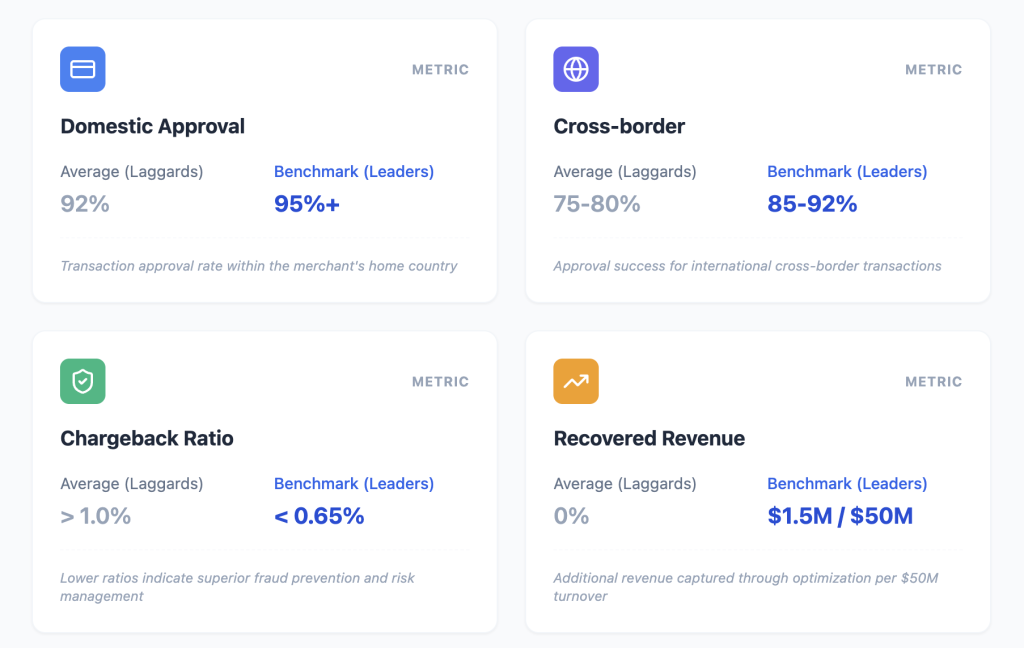
For those wondering if it is worth the investment, the data is clear:
Priorities for H1 2026
Mike Davydov highlights three key steps for PSPs and merchants:
- Instant Payments by Default: A2A and real-time payments are now the baseline.
- Frictionless Security: Using Face ID and Passkeys instead of SMS codes. Biometrics reduce drop-offs by 35%.
- AI as Architecture: Not a feature for presentations, but a tool to optimize routing and predict settlement delays.
“In 2026, success won’t come from scaling volume, it will come from scaling trust. The winners are those who create value in every transaction rather than just moving money from one pocket to another,” Mike concludes.
Conclusion
The shift of payment orchestration from a luxury to a necessity in 2026 is the result of a structural disruption in how value moves across the global economy. Real-time is now the baseline, digital assets are entering regulated ecosystems, and AI is transforming every layer of the value chain. For the modern enterprise, the era of simple, single-provider gateways has ended.
In the 2026 landscape, the leaders are those who decouple their business from individual providers, centralize their data, and adopt autonomous, AI-driven architectures. These organizations are not merely processing payments; they are orchestrating trust, optimizing liquidity, and building a flexible foundation ready for the next wave of innovation. Whether it is agentic commerce, the digital euro, or the full integration of the circular economy, this flexibility is key. For laggards, the cost of rigid, legacy stacks, measured in higher fees and lower approval rates, has become an insurmountable competitive disadvantage.
FAQ
What is payment orchestration and why does it matter in 2026?
Payment orchestration is a layer that sits above multiple PSPs and routes transactions intelligently. In 2026 it matters because single-provider setups cause up to 20% revenue loss from failed transactions and inefficient routing.
What is the ROI of implementing payment orchestration?
Based on industry data, network tokenization alone increases approval rates by 4.7% and reduces fraud by 34-47%. For high-volume merchants this translates directly into significant revenue recovery.
What is Agentic Commerce and how does it affect payments?
Agentic Commerce refers to AI agents making purchases on behalf of humans. By 2030 McKinsey projects 15-25% of US purchases will be handled autonomously, requiring orchestration platforms to validate AI agent identity in milliseconds.
What is PSD3 and how does it impact payment stacks in 2026?
PSD3 requires platforms to implement Verification of Payee and behavioral biometrics. PSPs now carry liability for spoofing fraud, making compliance a technical necessity not just a legal one.
How does LeaSoft help businesses implement payment orchestration?
LeaSoft builds custom payment backends and orchestration systems for companies across Europe and the US, specializing in SaaS architecture, gateway integrations and routing solutions.