
Starting a ride-hailing business sounds exciting until you realize how much goes into the technology side of it. Most first-time founders assume the app is the hardest part. It’s not. The harder part is figuring out what kind of platform you actually need, what questions to ask before handing over any money, and which providers are worth trusting when you have no technical background to fall back on.
This guide is written specifically for that situation. No jargon, no assumptions about your coding knowledge, just a clear-eyed look at how white-label taxi app platforms work, what separates a good one from a bad one, and which companies have built a genuine reputation doing this.
What a White-Label Taxi App Platform Actually Is
If you’ve been searching online, you’ve probably come across the term “Uber clone” more times than you can count. It’s a clunky label, but the concept behind it is straightforward.
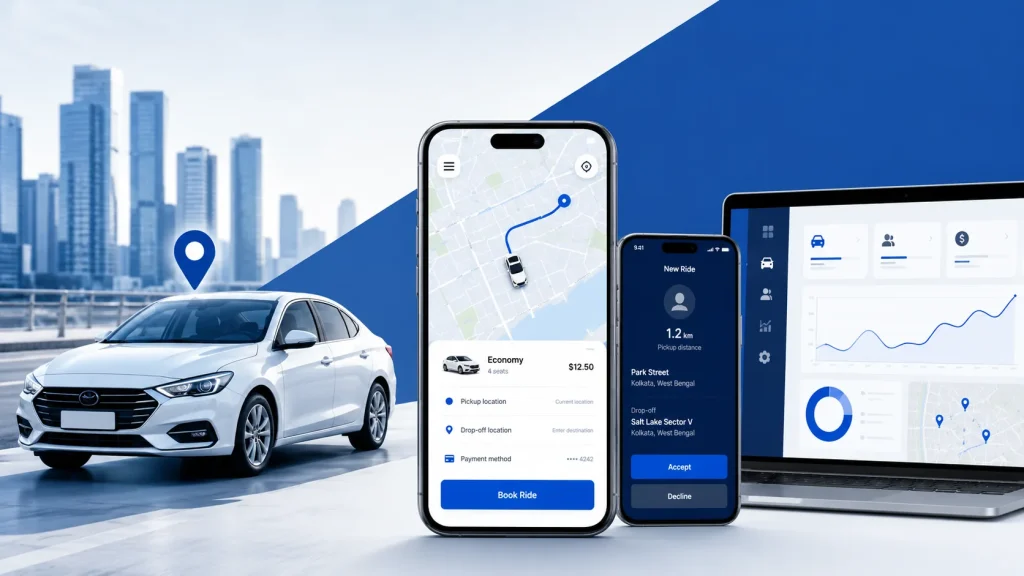
A white-label taxi app platform is software that someone else already built covering everything a ride-hailing business needs to function: a booking app for passengers, an app for drivers, and a backend dashboard where you manage the whole operation. You don’t build any of it. You license it, put your brand on it, and launch.
The appeal is obvious. Building a ride-hailing app from scratch costs hundreds of thousands of dollars and takes well over a year. A white-label platform gets you to market in a fraction of that time, with a product that’s already been tested in real conditions.What it is not, though, is a shortcut around thinking. You still need to pick the right platform, negotiate the right terms, and understand what you’re actually buying before you sign anything.
Key Features Every Uber Clone Provider Should Offer
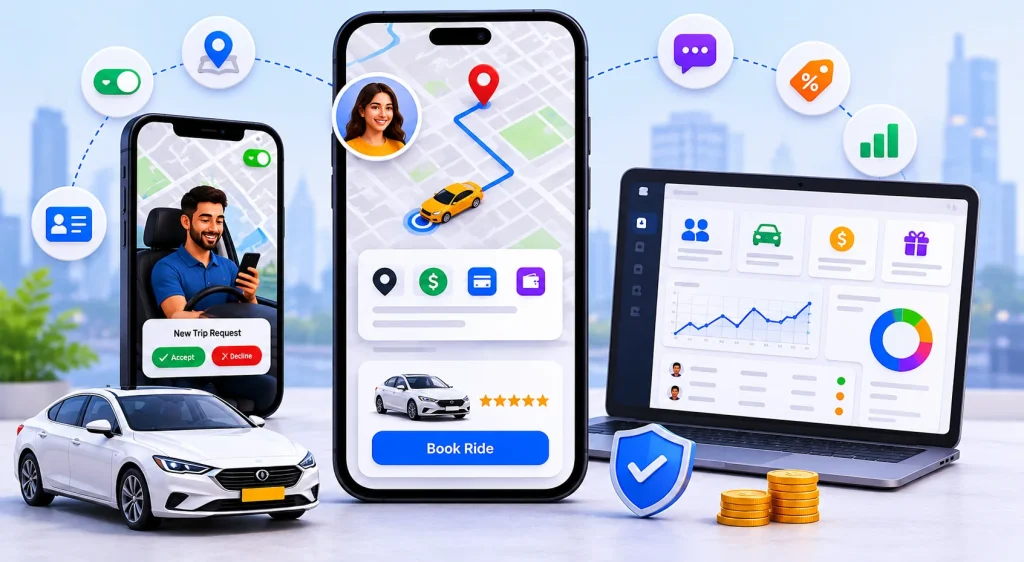
Before comparing providers, you need to understand what a complete platform looks like. Any serious offering covers three components:
The Passenger App
This is what your customers download. At minimum it should handle account creation, live driver tracking on a map, fare estimates before booking, in-app payment, and a trip history screen. These aren’t optional extras, they’re table stakes. If a provider’s demo app feels clunky or slow, that’s the product you’re selling to your customers.
The Driver App
Your drivers will use this every single day, often while navigating traffic. It needs to be fast, clear, and simple. Drivers should be able to see incoming requests, accept or decline, navigate to the pickup point, and track their weekly earnings without having to dig through menus. A confusing driver app causes driver churn, which kills a ride-hailing business faster than almost anything else.
The Operator Dashboard
Think of this as your control room. From here you set pricing, manage driver accounts, track active rides, create promotions, and pull revenue reports. A well-designed dashboard means you can run the business day-to-day without needing a developer on call. A poorly designed one means you’re paying someone every time you want to change a fare.
Some platforms also offer a web booking option, a corporate travel portal, or a dispatcher interface. Whether you need those depends on the type of service you’re running.
Five Questions Worth Asking Before You Commit
There’s no universal checklist that works for every situation, but these five questions tend to surface the most important differences between providers.
Do you get the source code?
This is the single most important thing to clarify. Some providers sell you a license to use their software you never own the code, and if they shut down or raise prices, you’re stuck. Others hand over the full source code, meaning you own the product outright and can take it anywhere. Both models exist in this market. Neither is inherently wrong, but you need to know which one you’re agreeing to. Owning the code can also make it easier to address software performance issues as your platform grows and operational demands increase.
What can actually be customized?
Every provider will tell you the platform is “fully customizable.” That word means different things to different people. Changing the logo and brand colors is customization. Changing how surge pricing works, adding a new vehicle category, or integrating with a third-party system that’s a different conversation entirely. Ask for specifics, and if possible, ask to speak with a current client about what they’ve been able to change.
Who handles the servers?
Some platforms are hosted by the provider who manages the infrastructure, and you access everything through a web dashboard. Others require you to host on your own servers, which means more control but also more responsibility (and usually more cost). As a non-technical founder, the hosted option is almost always easier to start with.
What does support look like after launch?
Pre-sale support is always excellent. What matters is what happens three months after you go live and something breaks at 11pm on a Friday. Ask directly: what’s the response time for critical issues? Is there a support contract? What’s included versus what gets billed separately?
Can you test it before buying?
A live demo should be non-negotiable. Not a video walkthrough of an actual working demo where you open the passenger app, book a test ride, watch the driver app respond, and then check the dashboard to see the trip recorded. If a provider resists this, treat it as a red flag.
Leading Uber Clone App Provider
Uberclone.co
A platform built with early-stage operators in mind. The core product covers the full trio passenger app, driver app, and admin panel and is designed to go live without a heavy technical setup process.
What it covers: Real-time GPS tracking, in-app payments, fare calculation, ride history, multiple vehicle categories, and branding customization including app name, logo, and colors. Available on both Android and iOS.
Who it suits: Founders who want to get a working product in front of real users quickly, without hiring a dev team or going through months of custom development. The setup process is designed to be manageable even for non-technical operators.
Worth checking: Walk through the demo in detail and get a written breakdown of what the base price includes versus what triggers additional costs. Clarify what support looks like six months after launch, not just on day one.
Elluminati
A clone script app development company with a focused track record in on-demand transport solutions. Their main taxi products EMagz and eCabs cover cars, bikes, and similar vehicle types, all managed from a single admin interface.
What it covers: Full passenger, driver, and admin app suite built on a modular architecture. Multi-city operations, multiple payment gateway integrations including regional methods, and custom development for operators who need more than the standard package.
Who it suits: Founders planning to run more than one type of service under the same platform rides, rentals, and delivery, for example. The multi-service setup is a practical advantage if expansion is part of the plan from the start.
Worth checking: Understand clearly whether you’re purchasing the off-the-shelf product or commissioning a custom build. The two differ significantly in cost, timeline, and what you end up with.
Apporio Infolabs
Apporio takes a more operationally focused approach than most ride-hailing platforms. The emphasis is on dispatch management and fleet control alongside the standard booking experience.
What it covers: A dispatch system with fleet tracking, zone management, and driver scheduling. Separate apps for passengers, drivers, and human dispatchers. Pre-scheduled rides, corporate accounts, and driver document management are all supported.
Who it suits: Operators who expect to rely on human dispatchers alongside automated booking or those transitioning from an existing phone-based dispatch operation into a digital platform. The dispatcher interface is a genuine differentiator here.
Worth checking: Test the dispatcher panel specifically if that’s central to how you plan to operate. Also ask about data migration if you’re moving over existing driver records or fleet information from another system.
RichestSoft
RichestSoft sits at the intersection of clone solutions and custom development, offering both under the same roof. That positioning is useful for founders who aren’t yet sure which direction they need to go.
What it covers: Ready-to-deploy clone apps for faster launches, alongside fully custom development for more specific requirements. Android, iOS, and web admin panel. Multi-language and multi-currency support included, along with global and regional payment gateway integrations.
Who it suits: Founders still weighing the clone versus custom decision. Starting with a clone and expanding to custom features later is a realistic path here without switching vendors mid-journey.
Worth checking: Get a clear written breakdown of what falls under the clone package and what gets scoped as custom work. Pricing and timelines differ considerably between the two, and the line between them isn’t always obvious upfront.
Mobisoft Infotech
Mobisoft operates more as a development partner than a product vendor. They build consultation into their process from the start, working through requirements before any code gets written.
What it covers: Custom and semi-custom taxi app development, driver management tools, automated dispatch, and a passenger-facing app. Deployment experience across Asia, the Middle East, and North America.
Who it suits: Founders whose requirements don’t map cleanly onto an off-the-shelf product, or those who want guided involvement throughout the process rather than a product handed over at the end. The discovery phase they run upfront tends to surface things founders didn’t know they needed to think about.
Worth checking: Their model involves more back-and-forth than a straightforward product purchase. Ask about how communication is structured during the build, what milestones look like, and what post-launch support actually includes.
Things That Should Give You Pause
A few patterns in this market are worth being cautious about, especially as a first-time buyer with no technical team to validate what you’re being sold.
Providers who won’t show you a working demo. Screenshots and explainer videos are not enough. If you can’t open the passenger app and book a test ride yourself, you have no way of knowing what you’re actually buying.
Vague or evasive answers about code ownership. This question should get a direct answer. If it doesn’t, assume you don’t own the code and weigh that accordingly.
Unusually low quotes for custom work. Custom app development is resource-intensive. A quote that seems significantly lower than competitors usually means the scope is much narrower than what you’re imagining.
No documented support policy. What happens when something breaks after launch is a reasonable question to ask before signing anything. If the answer is vague, that’s useful information.
Starting With a Clone vs. Going Custom From Day One
For most first-time founders, the honest answer is to start with a white-label platform and customize from there. The core ride-hailing flow passenger books, driver arrives, payment processes, both parties rate each other is well-served by existing platforms. There’s no need to build what’s already been built.
Custom development becomes the right call when your business genuinely operates differently from the standard model. Unusual pricing logic, a non-standard dispatch setup, regulatory requirements in your market that off-the-shelf products don’t accommodate, or deep integration with systems you already run these are cases where a clone probably won’t get you where you need to go.
A practical middle path that many operators take: launch with a clone to validate the market and get real revenue flowing, then commission custom features once you know exactly what needs to change. That approach keeps early costs manageable and avoids building the wrong things before you’ve learned what your actual users need. As build vs. buy framework suggests, the smarter move is usually to buy what exists and build only what genuinely differentiates you.
Before You Pick Anyone
The providers in this space vary widely in quality, and the sales process tends to be polished regardless of what the actual product looks like. A few things that are worth doing before committing:
Test the demo yourself. Talk to at least one existing client if the provider will connect you. Get everything about pricing, scope, and support in writing before any money changes hands. And be honest with yourself about how technical your team is, because that should influence which type of provider and which deployment model makes the most sense for you.
The right platform won’t be the same for every founder. It’s the one that fits what you’re actually building and a team that you can actually work with.
Nice breakdown, especially for someone exploring taxi app development for the first time. I like that the article focuses on practical considerations instead of just features. While researching this topic, I also found this comparison on building from scratch versus using a white-label platform, and it adds another useful perspective: https://mobisoftinfotech.com/resources/blog/build-vs-buy-white-label-taxi-app. Reading both helped me understand the trade-offs a bit better.