
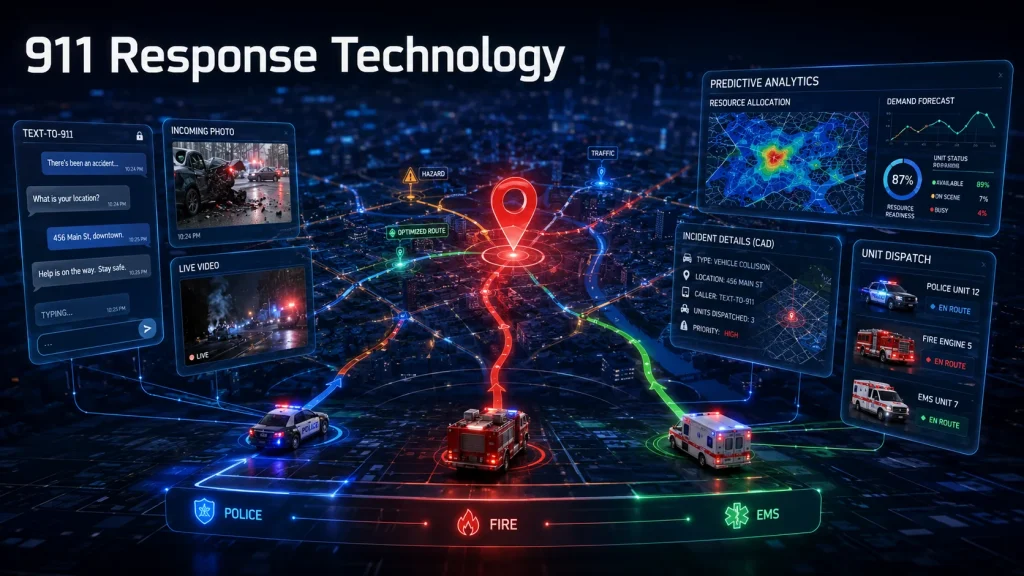
When an emergency strikes, every second matters. Behind the scenes, 911 operators play a crucial role in ensuring help reaches those in need as quickly as possible. While calm communication skills and training are essential, modern emergency response relies heavily on advanced digital technologies. These tools allow operators to locate callers more accurately, assess situations quickly, and dispatch the appropriate services without delay. As technology continues to evolve, emergency call centers are becoming faster, smarter, and more efficient than ever before.
Enhanced Call Location Systems
One of the most critical advancements in emergency response technology is Enhanced 911, often referred to as E911. This system automatically provides dispatchers with the caller’s phone number and approximate location, even if the caller is unable to speak or provide details.
For mobile devices, GPS integration takes this even further by pinpointing a caller’s location with greater precision. This is particularly important in situations where time is limited or the caller is disoriented. Some systems can even use Wi-Fi signals and cellular towers to refine location data when GPS signals are weak or unavailable.
These capabilities significantly reduce response time, especially in urban environments or large buildings where identifying the exact position can be challenging. By eliminating guesswork, operators can focus on gathering essential details and dispatching help.
Computer-Aided Dispatch (CAD) Systems
Computer-Aided Dispatch systems are the backbone of modern emergency communication centers. These platforms allow operators to log incoming calls, categorize incidents, and assign appropriate resources in real time.
When a call comes in, CAD software displays relevant details such as location, type of emergency, and any prior incidents associated with the address. This helps operators make informed decisions quickly. The system can also recommend the closest available units, ensuring that help arrives as soon as possible.
Additionally, CAD systems improve coordination among multiple agencies. Police, fire, and medical services can all access shared information, which reduces confusion and ensures a unified response. The integration of data across departments leads to more efficient handling of emergencies and better outcomes for those involved.
Geographic Information Systems (GIS) Mapping
Geographic Information Systems, or GIS, provide operators with detailed, real-time maps that enhance situational awareness. These maps display not only the caller’s location but also nearby landmarks, road conditions, and even potential hazards.
GIS technology allows operators to visualize the environment surrounding an emergency. For example, they can identify the fastest route for responders, taking traffic patterns or construction zones into account. In rural or remote areas, GIS data can include terrain details that help responders navigate more effectively.
This technology also supports better decision-making during large-scale emergencies. Operators can track multiple incidents at once and allocate resources based on proximity and severity. The result is a more strategic and efficient response system that adapts to changing conditions.
Next Generation 911 (NG911) Capabilities
Next Generation 911 represents a major leap forward in emergency communication. Unlike traditional systems that rely primarily on voice calls, NG911 allows for text messages, photos, videos, and other digital data to be sent directly to dispatch centers.
This is particularly useful in situations where speaking is not safe or possible. For example, individuals in dangerous situations can discreetly send a text message to request help. Photos and videos can provide operators with a clearer understanding of what is happening, allowing them to relay more accurate information to responders.
NG911 systems also support improved data sharing between agencies. This means that critical information can be transmitted quickly and efficiently, reducing delays and improving coordination. As more regions adopt this technology, the overall effectiveness of emergency response continues to improve.
Integrated Communication and Response Tools
Modern 911 centers rely on a range of integrated communication tools to streamline operations. These systems connect various departments and ensure that information flows seamlessly between them.
For example, radio communication platforms allow dispatchers to stay in constant contact with responders. At the same time, specialized applications, including fire department software, help manage incident reports, track equipment, and monitor team availability. This integration ensures that every aspect of the response is coordinated and efficient.
Some systems also incorporate predictive analytics, which can identify patterns and anticipate potential emergencies. By analyzing historical data, these tools help agencies prepare for high-demand periods and allocate resources more effectively.
Together, these technologies create a cohesive network that supports faster decision-making and improved service delivery. The ability to access and share information in real time is a game-changer for emergency response teams.
Conclusion
Digital technologies have transformed the way 911 operators handle emergencies. From precise location tracking and advanced dispatch systems to interactive communication tools and real-time mapping, these innovations make it possible to respond more quickly and effectively than ever before. As technology continues to evolve, emergency services will only become more efficient, helping save lives and protect communities. By combining skilled operators with cutting-edge tools, today’s 911 systems are better equipped to handle the challenges of modern emergency response.
NG911 accepting photos and videos directly changes how accurately dispatchers understand situations before responders arrive. GIS routing around real-time traffic instead of static maps cuts response times meaningfully. CAD systems sharing data across police, fire, and EMS simultaneously removes the coordination gaps that cost time.
Predictive analytics anticipating high-demand periods before they hit beats reactive resource allocation entirely. Text-to-911 protecting people in situations where speaking creates danger is genuinely lifesaving.
I found some platforms covering emergency tech, communication systems, and digital infrastructure over at https://etechdevices.com/ and https://www.scan.co.uk/ worth exploring.