
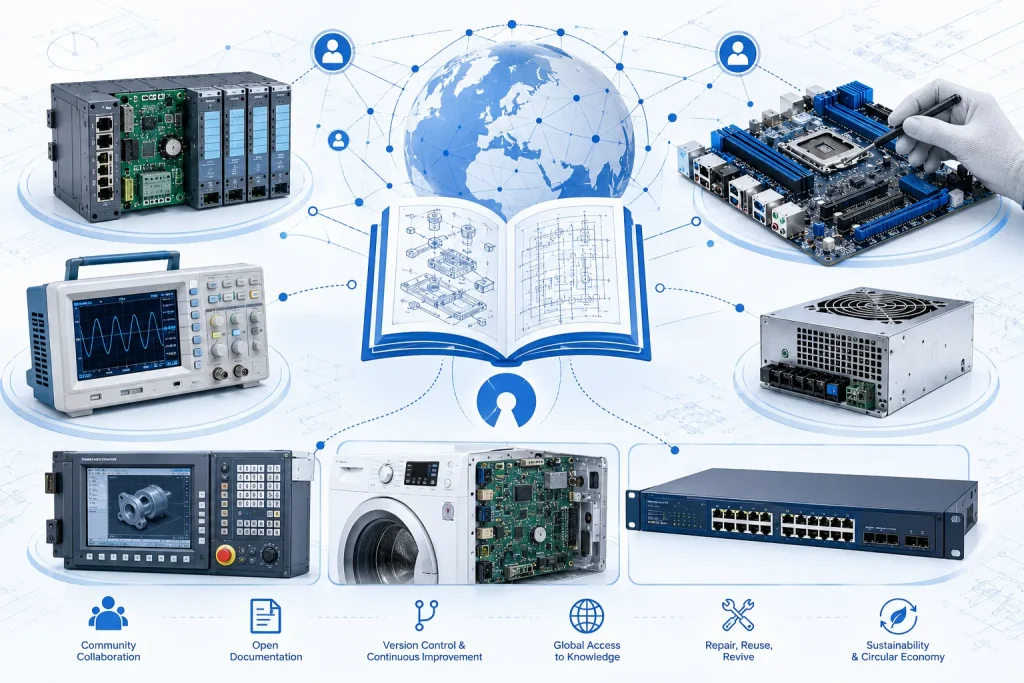
In a world where technology evolves at an unprecedented pace, countless devices are discarded long before they reach the end of their functional lives. From industrial machinery and household appliances to specialized electronic equipment, many products become unusable simply because repair information disappears or manufacturer support ends. A growing movement known as decentralized engineering is changing this reality. By creating and sharing open-source technical manuals, engineers, hobbyists, repair specialists, and communities are preserving valuable knowledge that would otherwise be lost.
Understanding Decentralized Engineering
Decentralized engineering refers to the collaborative development, preservation, and distribution of technical knowledge through open networks rather than relying solely on manufacturers or centralized organizations. In practice, this often involves communities creating detailed repair guides, schematics, maintenance instructions, and troubleshooting resources that are freely accessible online.
Unlike traditional documentation systems, which can disappear when a company discontinues a product, decentralized repositories ensure that critical information remains available to anyone who needs it. Engineers, technicians, and enthusiasts contribute updates, corrections, and newly discovered solutions, creating living documents that evolve over time.
This model has become particularly valuable as consumers and businesses seek alternatives to replacing expensive equipment whenever a fault occurs.
The Problem of Dead Hardware
Many devices become “dead hardware” not because they are physically beyond repair, but because the information required to fix them is unavailable. When manufacturers stop supporting older products, service manuals, component diagrams, and software tools often become difficult or impossible to obtain.
This issue affects a wide range of products, including industrial controllers, laboratory equipment, consumer electronics, and household appliances. In some cases, replacement components are still available, but without technical guidance, repairs become impractical.
For example, technicians searching for compatible components or bosch spare parts often depend on community-generated documentation to identify correct specifications, installation methods, and troubleshooting procedures for older systems that no longer receive official support.
The Rise of Open-Source Technical Manuals
Open-source technical manuals are transforming the repair landscape by making engineering knowledge accessible to everyone. These manuals often include exploded diagrams, wiring schematics, maintenance procedures, calibration instructions, and detailed repair workflows.
Unlike static printed manuals, open-source resources benefit from continuous improvement. Contributors can add photographs, update outdated information, translate content into multiple languages, and document newly discovered repair techniques.
Platforms dedicated to repair documentation have become valuable knowledge hubs where users share practical experiences and verified solutions. This collective intelligence frequently surpasses the depth and usefulness of original manufacturer documentation.
As a result, equipment that was once considered obsolete can often be restored to full functionality.
Extending Product Lifecycles Through Collaboration
One of the most significant benefits of decentralized engineering is its ability to extend product lifecycles. Instead of discarding equipment after a failure, owners can access repair information that enables cost-effective restoration.
This approach benefits both individuals and organizations. Businesses can continue operating legacy systems without investing in expensive replacements, while consumers can keep trusted devices functioning for longer periods.
The collaborative nature of open-source documentation also accelerates innovation. Repair experts frequently discover alternative methods, substitute components, and performance improvements that were never included in official manuals. These insights become part of a growing knowledge base that supports future users.
Over time, communities build extensive archives that preserve engineering expertise for generations.
Supporting Sustainability and the Circular Economy
The environmental impact of electronic waste continues to grow worldwide. Manufacturing new devices requires raw materials, energy, and complex supply chains. Extending the life of existing hardware reduces demand for new production and minimizes waste.
Open-source technical manuals play a crucial role in supporting the circular economy. By enabling repair, refurbishment, and reuse, they help keep valuable products in circulation rather than sending them to landfills.
Decentralized engineering aligns with broader sustainability goals by encouraging responsible resource management. Every successful repair represents materials saved, emissions avoided, and economic value preserved.
As environmental regulations and consumer awareness increase, access to repair knowledge is becoming an increasingly important component of sustainable technology management.
The Future of Decentralized Engineering
The future of decentralized engineering appears promising as digital collaboration tools continue to evolve. Artificial intelligence, cloud-based repositories, and community-driven verification systems are making technical documentation more accurate and accessible than ever before.
Manufacturers are also beginning to recognize the value of openness, with some organizations embracing repair-friendly policies and supporting knowledge-sharing initiatives. Combined with growing right-to-repair movements, these developments are creating a stronger foundation for long-term hardware sustainability.