
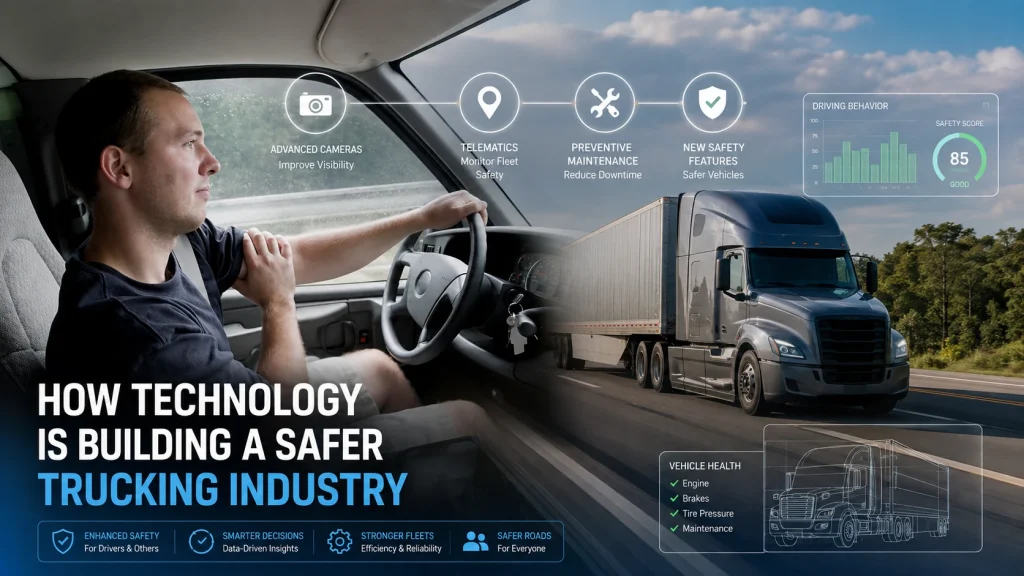
The trucking industry plays an essential role in keeping goods moving across the country, but operating large commercial vehicles comes with significant safety responsibilities. From long hours on the road to changing traffic conditions, truck drivers and other motorists face numerous hazards every day. Fortunately, technology is giving trucking companies new ways to identify risks, monitor vehicles, and encourage safer driving practices. According to the National Highway Traffic Safety Administration, an estimated 40,990 people died in motor-vehicle crashes in the U.S. in 2023, highlighting the importance of continued safety improvements. In this article, we’ll explore how technology is helping create a safer trucking industry.
Advanced Cameras Improve Visibility
One of the most valuable technological developments in trucking is the use of cameras. Integrated cameras can provide drivers with additional visibility around their vehicles, helping them monitor blind spots, surrounding traffic, and potential hazards. Camera systems can also support fleet managers by providing information about what happened during a roadway incident.
These systems may be especially useful when trucks are changing lanes, backing into loading areas, or navigating congested roads. With better visibility, drivers can make more informed decisions and potentially reduce the likelihood of collisions.
Telematics Helps Monitor Fleet Safety
Telematics systems are another important tool for modern trucking companies. These systems can collect and transmit information about vehicles, allowing fleet managers to monitor factors such as vehicle location, driving behavior, fuel consumption, and maintenance needs.
This information can help companies identify patterns that may create safety concerns. For example, data could reveal repeated harsh braking, rapid acceleration, or other driving behaviors that warrant additional training. Fleet managers can then use these insights to encourage safer habits and address potential problems before they become serious.
According to Business Research Insights, 35% of trucks in North America were equipped with advanced safety or fuel-efficiency accessories, including integrated cameras and telematics systems, in 2024. As adoption continues, these technologies could become an increasingly common part of fleet safety programs.
Technology Supports Preventive Maintenance
Safety technology is not limited to monitoring drivers. It can also help trucking companies maintain their vehicles. Connected systems can provide information about vehicle performance and alert operators when certain components may require attention.
Preventive maintenance is important because mechanical problems can create dangerous situations on the road. Identifying potential issues earlier can give fleet operators an opportunity to schedule repairs before a vehicle develops a more serious problem. This approach can also reduce unexpected downtime and help trucks remain in better operating condition.
New Trucks Bring New Safety Features
The continued purchase of new trucks also creates opportunities for trucking companies to adopt newer safety technologies. Modern commercial vehicles can incorporate increasingly sophisticated systems designed to assist drivers and improve vehicle performance.
According to Gitnux, more than 300,000 new trucks are sold annually in the U.S., reflecting continued industry investment and growth. As fleets replace older vehicles, companies have more opportunities to introduce updated safety features, connected technologies, and driver-assistance systems.
Building a Culture of Safety
While technology can provide valuable information and assistance, it works best when combined with responsible driving and effective safety policies. Trucking companies can use technology to supplement driver training, reinforce safe practices, and better understand the risks their fleets encounter.
The goal should not be to rely on technology alone. Instead, cameras, telematics, maintenance monitoring, and other tools can give drivers and fleet managers additional resources for making safer decisions.
Technology is changing how trucking companies approach roadway safety. From cameras that improve visibility to telematics that provide valuable fleet data, modern tools can help identify risks and support better decision-making. Preventive maintenance technology and newer vehicle features can further strengthen safety efforts.
As trucking continues to grow and evolve, embracing useful technology can help companies protect drivers, other motorists, and the communities they serve. Combined with training, responsible driving, and strong safety practices, technological innovation can play an important role in building a safer trucking industry.