
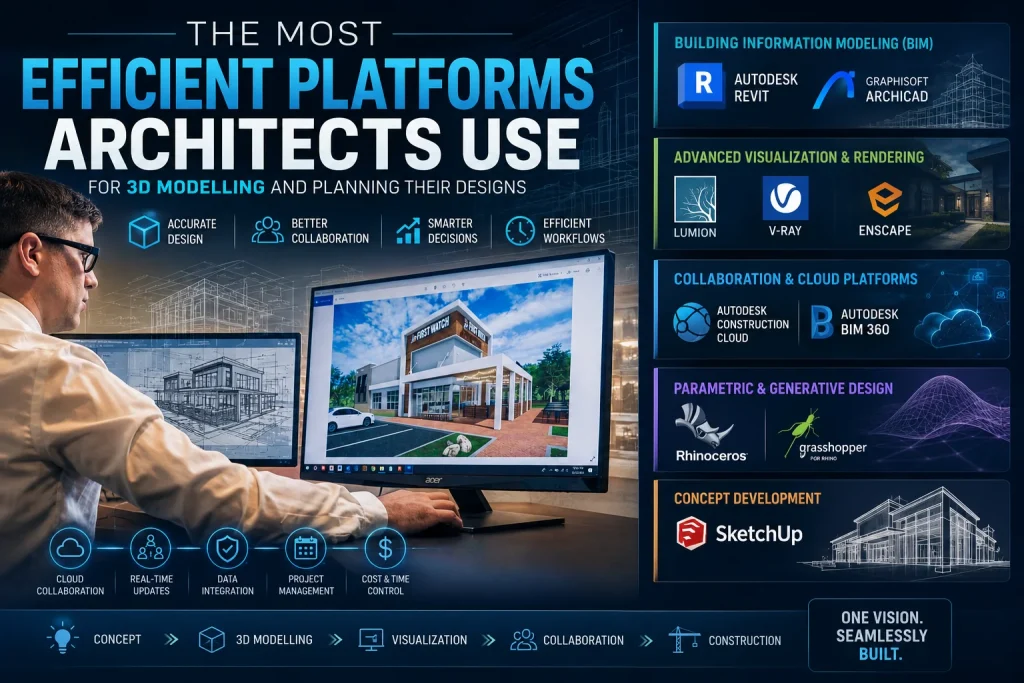
Modern architecture relies heavily on advanced technology to bring ideas to life with precision and efficiency. Gone are the days of relying solely on paper sketches and physical models. Today, architects use sophisticated digital platforms to design, visualize, and plan every detail of a structure before construction even begins. These tools not only streamline workflows but also improve collaboration, accuracy, and overall project outcomes. Understanding which platforms are most effective and how they are used can offer valuable insight into the evolving nature of architectural design.
Building Information Modeling as a Foundation
One of the most widely used approaches in architectural design today is Building Information Modeling, commonly known as BIM. This method goes beyond simple 3D modeling by incorporating data-rich elements that represent real-world materials, systems, and performance metrics. Platforms like Autodesk Revit and ArchiCAD have become staples in the industry due to their ability to create intelligent models that adapt as changes are made.
With BIM, architects can visualize an entire building in a fully integrated environment. Every component, from walls to mechanical systems, is interconnected, allowing for real-time adjustments and consistency across the project. This reduces errors, improves coordination among teams, and ensures that design intentions are accurately translated into construction plans. For complex projects, BIM serves as a critical foundation that keeps everything aligned.
Advanced Visualization with 3D Rendering Tools
While BIM focuses on functionality and data, visualization tools take design presentation to the next level. Platforms like Lumion, V-Ray, and Enscape allow architects to create highly realistic renderings and walkthroughs of their designs. These tools help clients and stakeholders better understand the final look and feel of a project before it is built.
High-quality rendering plays a key role in decision-making. Lighting, textures, and environmental context can all be adjusted to showcase how a building interacts with its surroundings. Architects can experiment with different design elements and immediately see the results, making it easier to refine concepts and achieve the desired aesthetic. These tools also enhance communication by providing clear, engaging visuals that eliminate ambiguity.
Collaboration and Integration Across Teams
Architectural projects often involve multiple professionals, including engineers, contractors, and designers. Efficient collaboration is essential to ensure that everyone is working from the same information. Many modern platforms are designed with integration in mind, allowing teams to share data and updates seamlessly.
Cloud-based solutions such as Autodesk Construction Cloud and BIM 360 enable real-time collaboration across different locations. Team members can access the latest versions of models, track changes, and communicate effectively within a shared digital environment. Integrating these platforms with construction management software further enhances coordination by connecting design data with scheduling, budgeting, and resource planning. This holistic approach reduces miscommunication and helps keep projects on track from concept to completion.
Parametric and Generative Design Capabilities
Parametric design tools have introduced a new level of flexibility and creativity in architecture. Platforms like Rhino with Grasshopper allow architects to create designs based on algorithms and parameters rather than fixed dimensions. This means that changes can be made dynamically by adjusting variables, resulting in innovative and adaptive structures.
Generative design takes this concept even further by using computational power to explore multiple design options based on specific constraints. Factors such as materials, site conditions, and performance goals can be input into the system, which then generates a range of solutions. Architects can evaluate these options and select the most effective one. This approach not only saves time but also encourages experimentation and innovation in ways that traditional methods cannot match.
Concept Development with User-Friendly Tools
Not every stage of architectural design requires highly complex software. In the early phases, user-friendly tools like SketchUp play an important role in quickly bringing ideas to life. These platforms allow architects to create rough models and explore concepts without the need for extensive technical detail.
SketchUp, for example, is known for its intuitive interface and ease of use. It enables designers to test layouts, proportions, and spatial relationships efficiently. Once a concept is refined, it can be transferred into more advanced platforms for detailed development. This flexibility makes it an essential part of many architects’ workflows, bridging the gap between initial ideas and fully developed designs.
Conclusion
The platforms architects use for 3D modeling and planning have transformed the design process into a highly efficient and collaborative endeavor. From data-driven BIM systems to advanced rendering tools and parametric design platforms, each solution plays a unique role in shaping modern architecture. By leveraging these technologies, architects can create more accurate, innovative, and visually compelling designs while improving communication and project management. As technology continues to evolve, these tools will only become more powerful, further enhancing the way architects bring their visions to life.