
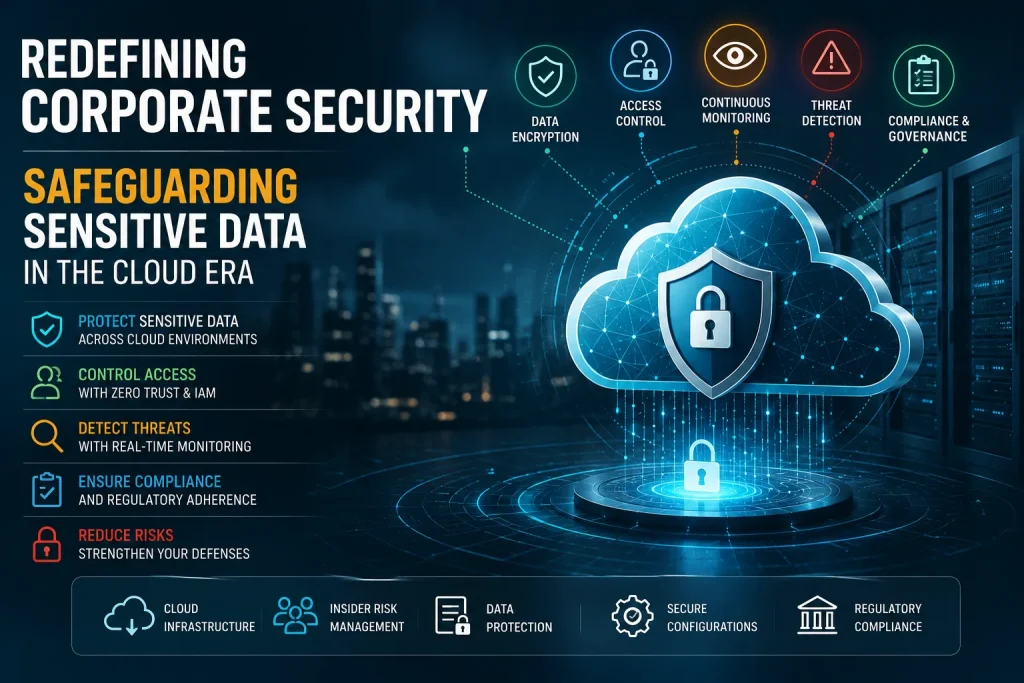
The explosive rise of the cloud has fundamentally changed how companies store, access, and share critical information. From customer data and financial details to intellectual property and strategic plans, sensitive data is now stored in the cloud. This is a double-edged sword, as the cloud provides new possibilities for companies to reach their goals while also introducing vulnerabilities that necessitate a radical rethinking of corporate security.
The Evolution of Corporate Security
Traditional corporate security is built upon the idea of securing the perimeter. Firewalls and anti-virus programs were designed to prevent data theft from company servers. However, the emergence of cloud computing changes the paradigm in which corporate data is handled. With cloud computing, data is no longer contained in a local area network secured by a company’s physical infrastructure. Data is accessed from various platforms and devices and is handled in part by the cloud service provider.
The above changes necessitate a new approach to corporate security. As businesses now rely on data more than ever, the focus of security should turn from securing the network perimeter to ensuring that data is only accessed by authorized parties. It is important for companies to know where their data is, who has access to it, and how it is being used.
Key Risks in the Cloud Era
Cloud environments offer many advantages, but they also present unique security risks. Understanding these risks is the first step toward building an effective protection strategy.
- Data breaches: Cybercriminals target cloud platforms because they often contain large volumes of valuable information.
- Bad cloud settings: A bad configuration of storage buckets, access controls, or security settings can expose vital data to the public.
- Threats from inside: Employees, contractors, or third-party users with access to cloud systems may intentionally or unintentionally compromise data security.
- Compliance violations: Organizations must ensure that cloud data handling practices comply with regulations such as GDPR, HIPAA, and industry-specific standards.
- Advanced cyberattacks: Threat actors are using increasingly sophisticated techniques, including phishing, ransomware, and credential theft, to gain access to cloud systems.
Addressing these risks requires more than installing security software. It involves creating a layered defense strategy that integrates technology, policies, and ongoing monitoring.
Building a Robust Cloud Security Strategy
A strong cloud security framework should be tailored to the organization’s specific operations, data sensitivity, and regulatory requirements. Businesses that rely on contract administration services must pay particular attention to protecting contractual documents, financial records, and confidential client information stored in cloud systems.
- Data encryption: Encrypting data both in transit and at rest ensures that sensitive information remains unreadable to unauthorized users.
- Access control: Implementing multi-factor authentication and role-based access control limits access to only those individuals who require it for their work.
- Continuous monitoring: Real-time monitoring and threat detection tools help identify unusual activity before it escalates into a serious security incident.
- Regular security assessments: Conducting audits and penetration tests allows organizations to identify vulnerabilities and strengthen their defenses.
By implementing these measures, organizations can reduce the likelihood of security incidents while maintaining the operational benefits of cloud technology.
The Role of Governance and Compliance
Effective cloud security is not only a technical challenge but also a governance and policy issue. By implementing organizational policies such as data classification, access control, response playbooks, and vendor risk assessments, companies can ensure that everyone knows their role in keeping corporate data safe.
At the same time, compliance is a significant concern when it comes to cloud security. In many ways, organizations are required to show regulators that they do everything possible to protect the personal data of their clients and, more broadly, any confidential information. If an organization fails to meet specific requirements, it may have to pay steep fines and suffer other severe consequences.
Future Trends in Cloud Security
As companies adopt cloud technologies more and more, corporate security protocols are also set to evolve. With that being said, artificial intelligence and machine learning will play an even greater role in detecting threats. Moreover, the security field is witnessing the rise of the zero-trust concept. This approach requires verifying each request’s origin before granting access to company resources.
Another trend that will reshape the corporate security landscape is DevSecOps. This approach aims to ensure that software and cloud products are secure and trustworthy. By implementing the idea of DevSecOps, businesses can reduce the number of applications and data that require special protection.
Final Remarks
The cloud era has brought new meaning to the phrase corporate security. The ability to protect sensitive data requires organizations to implement a combination of technologies, security measures, and procedures. Companies that incorporate these practices can safely take advantage of the cloud while reducing the risk of potential breaches.